The Hidden Inflation Risk from the Iran Conflict
Peter Reagan
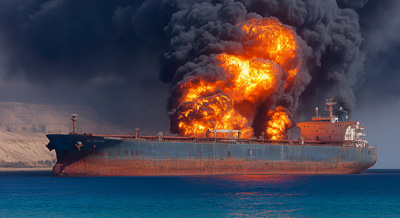 The Iran conflict. The Iran conflict.
At this point, even those rare individuals living in a closet without television or internet have heard about the fighting.
Most people are focused on the military and political dimensions.
That’s understandable.
But there’s another part of the story that affects nearly every American household – and it has nothing to do with geopolitics.
It has to do with prices.
Because when conflict breaks out in a region that produces a large share of the world’s energy, the consequences rarely stay overseas.
They show up at home.
Often quietly.
And usually in the form of higher costs.
The first place it shows up: Energy and fuel
Many Americans assume conflict involving Iran shouldn’t affect them personally. (After all, the United States doesn’t import much oil from Iran because of sanctions; in fact, the U.S. is virtually independent of energy imports.)
Understandable. But global energy markets don’t work that way.
Oil is priced globally, and disruptions anywhere – or even the risk of disruptions – can move prices everywhere.
According to Reuters, oil prices recently climbed as traders worried the conflict could threaten supply routes or regional production.
And those price moves show up quickly at the pump.
Reuters energy reporter Shariq Khan recently noted that the national average gasoline price has climbed to its highest level since November.
Four months may not sound like much.
But gasoline is only the beginning.
The fuel that really drives the economy
The more important number is diesel.
Reuters also reported that U.S. diesel prices have risen above $4 per gallon for the first time in nearly two years, a move analysts say could ripple through the entire economy.
Why?
Because diesel is the fuel of logistics.
Nearly everything in the American economy moves on diesel at some point:
- Trucks delivering goods from warehouses to stores
- Freight trains hauling containers across the country
- Cargo ships transporting imports to U.S. ports
- Farm equipment harvesting crops
The American Trucking Associations estimates trucks move more than 68-72% of U.S. freight.
And almost all of those trucks run on diesel.
When diesel prices rise, transportation costs rise.
And transportation costs eventually become…
Higher prices.
How fuel prices become grocery prices
This link between fuel and inflation isn’t always obvious.
You don’t see “diesel surcharge” printed on a grocery receipt.
But the costs are there.
If a cargo ship pays more for fuel, shipping companies charge more.
If trucking companies pay more for diesel, freight costs rise.
If freight costs rise, retailers pay more to stock their shelves.
And when retailers pay more…
Consumers do too.
It’s a chain reaction that stretches from oil wells to the checkout line.
Why inflation fears may return
Here’s where the story gets interesting.
Normally, during geopolitical crises, investors rush into government debt as a perceived safe haven.
But Financial Times columnist Katie Martin recently noted that government debt has actually weakened during the recent tensions, an unusual move for periods of global stress.
Why would that happen?
One possible explanation is a higher cost of living.
Rising energy prices can push up transportation costs, manufacturing costs, and food prices all at once.
In other words, the market may be worried that this conflict could reignite the inflation problem that policymakers have been trying to bring under control.
The long-term perspective
Events like this are reminders of something important.
Inflation rarely arrives neatly labeled.
It often begins with a shock somewhere in the global system – an energy crisis, a supply disruption, or a geopolitical conflict.
Then the ripple effects spread through the economy.
Prices climb. Savings buy a little less. And households feel the difference.
That’s why many long-term savers choose to diversify their savings with assets that have historically responded well during inflationary periods. Physical precious metals have played that role for centuries.
If you’d like to learn more about how they work – and how some Americans hold them in tax-advantaged retirement accounts – you can request our free 2026 Precious Metals Information Kit.

Peter Reagan is a financial market strategist at Birch Gold Group. As the Precious Metal IRA Specialists, Birch Gold helps Americans protect their retirement savings with physical gold and silver.
www.birchgold.com
|