
Send this article to a friend:
March
09
2026
|
Send this article to a friend: March |
The Fog of Oil
The Fundamentals Stay the SameFor years, of course, we have tracked the fundamental drivers which impact the gold price (from DXY debates, inflation signals, and de-dollarization headlines to COMEX outflows). All of these complex signals and themes ultimately boil down to a simple realization: Gold rises as debt-trapped nations debase their currencies to monetize their increasingly unloved IOUs. This is pure fundamentalist thinking, and it works. Gold’s direction is easy, because the fall of paper currencies is now obvious. In short, real money (gold and silver) historically gets the last say over paper money (USD), paper metals (COMEX) and paper promises (USTs). Or stated even more simply: Rock openly beats paper. Gold, as a Tier-1 preservation asset, is thus not a trade to enter or exit; it’s a leading strategic reserve asset, FX protagonist and superior store of value to be held, not speculated. One saves in precious metals and spends in fiat. Fundamentals such as these make a now dispositive case for the long-term holding of gold. Oil Headlines, Gold TailwindsNotwithstanding such fundamentals of gold ownership and future direction, there are nevertheless additional reasons, and tailwinds, to gold ownership, including: Oil. The interplay between oil and the dollar, oil and gold, and oil and war are themes we have addressed numerous times in prior articles and years. This is because, having long ago understood just how much gold matters, we have not forgotten that oil matters too… No CoincidencesAs the U.S. now finds itself once again in a military conflict with a major oil producer like Iran (think back as well to Libya, Iraq, or Venezuela), do any of us really think oil is not a central character to this current global plot twist? I, of course, am not here to pick winners or losers, identify good actors from bad actors, or make military or political predictions in a fog of war, politics, media pundits and armchair military strategists. Such matters are for others to opine upon. But as market participants, we can look less to FOX news or the latest bombing strikes and look objectively at those flows, signals and correlations which we can use to our advantage. By this, I am referring specifically to the data on money flows and the rhyming (instructive) history of gold’s movements relative to oil shocks, oil wars and oil price patterns. Why? Again, because in a modern, energy-centric world, oil matters. It really matters. Oil & WarWars, for example, are not only fought over oil, they end over oil—at least for those who have the least of it. One of Japan’s primary motives behind its surprise attack on Pearl Harbor, for example, was tied to protecting oil channels in the far east after a pre-December 7th America cut its critical oil imports. And as for all the many reasons Germany lost that same war, much of it had to do with its oil reserves falling from 180,000 tons to 11,000 tons by 1945. Just ask Rommel’s tank commanders or any pilot flying for the Luftwaffe what oil meant to their plans… Gold & Oil Supply Shocks But not only does oil matter pre and post wars, its direct tie to gold pricing is equally confirmed by history, namely a history of oil supply shocks. Many, for example, can remember OPEC’s 1973 oil embargo, which sent gold from $90 to $180 in 12 months. Six years later, during the 1979 revolution in Iran, the subsequent supply shock in oil took gold from $220 to $850 in a similar time frame. Fast forward to the 1991 Gulf War, and gold rose by 10% in just weeks. Decades later, at the 2022 outbreak of war in the Ukraine, oil hit 130 and gold immediately broke a key, $2050 resistance line. See any signals here? Any patterns? In other words: Oil shocks send gold higher. Current HeadlinesWhat happens today or tomorrow in this latest conflict with Iran is beyond my crystal ball. What we do know, however, is that 1/5 of the world’s oil flows through the Strait of Hormuz, over which Iran can cause obvious problems on shipping – i.e. a “supply shock.” This might explain why Lloyd’s of London cancelled its maritime insurance for this region, forcing the UK government to do the insuring itself. An Honest LighthouseFor gold investors who have always known gold’s longer-term price direction and larger, evolving and historical role as a monetary metal in a time of changing monetary order, the case for gold remains as obvious today as it was yesterday and will be tomorrow. What we are now tracking as to gold’s behavior with oil headlines, markets and potential supply shocks simply adds greater dimension (and likely tail winds) to an asset already moving secularly forward on its own fundamental properties and merits. This direction is entirely due to the embarrassing lack of merit for paper dollars and unloved sovereign IOUs, themes we’ve been addressing for years. As we stand today in the fog of yet another war whose ripple effects and currents invite the usual and seemingly endless commentary and debate, there is some consolation in having at least one honest and golden lighthouse upon which can rely to navigate today’s noise and preserve our wealth into an uncertain tomorrow.
|
Send this article to a friend:
 |
 |
 |
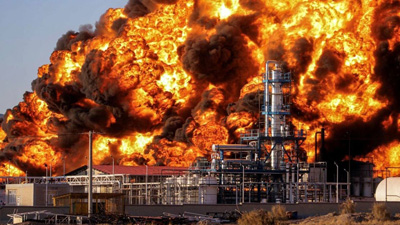 War, oil and gold are making headlines of late for overlapping and independent reasons. Below, we avoid the guesswork, finger-pointing or sensationalism attendant to current headlines concerning Iran and stick to a theme which offers some clarity, namely the interplay of oil and gold.