Send this article to a friend:
January
05
2026
|
Send this article to a friend: January |
Vistra Jumps After Buying 10 Nat Gas-Fired Power Plants For $4 Billion
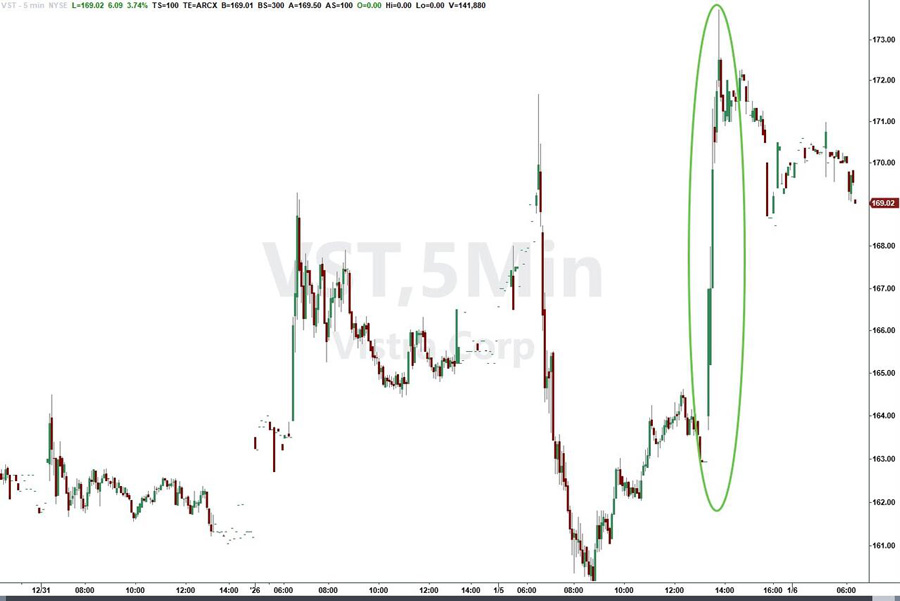
Late on Monday, electricity supplier Vistra agreed to pay $4 billion for 10 natural gas-fired power plants in the US Northeast and Texas to expand the electricity supplier’s generation capacity in fast-growing energy markets. The acquisition, which was funded with $2.3 billion in cash, $900 million in Vistra stock and the assumption of $1.5 billion in debt (partly offset by expected tax benefits) includes assets with a total capacity of 5.5 gigawatts on three major US grids: New England, Texas and PJM, the system that spans New Jersey to Chicago. The acquisition includes three combined cycle gas turbine facilities, two combustion turbine facilities located across PJM, four combined cycle gas turbine facilities in ISO New England and one cogeneration facility in ERCOT. The generators were purchased from Cogentrix Energy, which is indirectly owned by funds managed by Quantum Capital Group. "The addition of this natural gas portfolio is a great way to start another year of growth for Vistra as we've completed, acquired, or developed projects in each of the competitive power regions where we operate," said Vistra CEO Jim Burke. This acquisition follows Vistra's $1.9 billion deal in May 2025 for seven gas-fired plants with nearly 2,600 megawatts of combined capacity from Lotus Infrastructure Partners, and will diversify and expand Vistra's geographic footprint by adding 5,500 megawatts of net capacity across some of the major power regions in North America. The US Energy Information Administration estimates electricity consumption in the country to reach record highs in 2026, driven by surging demand from data centers racing to support Big Tech's growing AI ambitions. Power providers are increasing their portfolios of power assets, and gas-fired plants in particular, to meet surging demand from electricity-hungry data centers. The artificial intelligence boom has triggered a dramatic reversal of fortunes for the historically volatile independent power sector by spurring unprecedented demand growth. In response, investors have been bidding up power stocks as if they were tech giants. Vistra has been on a buying spree since the $6.8 billion acquisition of a nuclear fleet in 2024 and the $1.9 billion purchase of seven gas plants in May. Rivals like NRG Energy and Constellation Energy Group also have been snapping up gas-fueled units in multibillion-dollar deals in recent months. Gas plants are seen as ideal sources for around-the-clock data center demand. But, as Bloomberg notes, a key challenge is that the cost of building big new gas plants has more than doubled and new turbine orders won’t get delivered until at least 2030. Vistra said it paid about $730 per kilowatt for the 10 generators owned by Cognetrix, which is slightly less than the $743 paid for seven plants last year. That’s about one-third the average cost for a new gas power plant, according to November 2025 report by BloombergNEF, suggesting that the deal was an absolute steal for Vistra. Vistra expects to close its latest purchase this year, pending federal and certain state regulatory approvals. Goldman Sachs & Co served as financial advisor and agreed to provide up to $2 billion in bridge loans. Evercore served as financial adviser to Cogentrix. Vistra’s shares climbed as much as 6.6% in late trading Monday.
|
Send this article to a friend:
 |
 |
 |
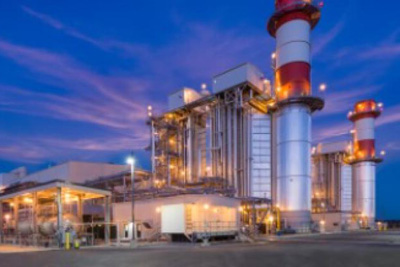 It didn't take long for markets to get a reminder of the screaming shortage of energy assets needed to energize the AI revolution.