
Send this article to a friend:
January
05
2026
|
Send this article to a friend: January |
Gold Didn’t “Spike,” It Was Repriced (and Silver Is Catching Up)
Gold makes its 50th consecutive best move in 50 years, or somethingMost gold bugs probably didn't dare to expect gold leaping to $4,530 last week. As seen on Bloomberg, though, gold notched its best run since the 1970s. Yes, we have seen corrections to the tune of 5% happen for no particular reason. And there haven't been any black swans that make an obvious, explanatory story. The last bit is my favorite, because I have argued for two years now that this leg of gold's run is being powered by basic fundamentals like currency debasement and dedollarization. Financial media and some analysts tried to pin every single all-time high on some regional event across the far sea, I strived to remind readers to focus on what really seems to be taking place: A gold revaluation. A global repricing of risk . To her credit, Bloomberg’s Jui Chakravorty does acknowledge that the gold price explosion is basically happening due to a series of considered investment decisions. Banks, private institutions, private investors: Everyone seems to have woken up to the benefits of gold ownership. Still, the article again says that a steady drumbeat of geopolitical risk is playing an important role. More geopolitical risk than in, say, 2017, when North Korea essentially threatened to nuke us? Can't be. Yet while it did okay in 2017, and after, say, Brexit, which is as geopolitically upheaving as things get these days, gold's moves back then were tempered. I’m able to entertain an idea that seems beyond the financial media… That gold price is surging to new highs because that's what it's worth. They have trouble admitting this because doing so threatens the entire currency-based financial system. (For example, even the Bloomberg article above can't resist mentioning a Venezuela crisis as a contributor to gold's massive jump.) Has anyone you know decided to invest in gold because of a crisis in Venezuela? There's a few interesting points in the lower section of the article, which don't reference gold but all essentially explain gold's run. China's having an infrastructure squeeze with the lowest amount of borrowing since 2019. South Korea's won is "nearing" crisis levels, in reality long having passed them. I'll get to that in a moment. Japan is agreeing to invest $550 billion in the U.S. That's the same Japan that recently lost its safe-haven currency status as yen gold valuations exploded far in excess relative to other currencies. Good news if you're a U.S. citizen, or better yet someone with access to the Treasury, not so much if you're a Japanese citizen, as in that case you're footing the bill. And despite all that, the Asian nation whose currency holds the worst performer title is actually India, with 1 billion plus citizens struggling to make basic ends meet with a collapsing rupee. Getting back to the Korean won. We know the official narrative should go into the bin when we're being told that needing 1,500 won to buy $1 still only leaves the won "near" crisis levels. Does that make sense to anyone? This is how Japan got started, after all. It was 100-to-1 to the greenback for the longest time, and everyone was still being told it's a haven currency. And then it wasn't. The pound sterling has experienced a historic collapse in the last two decades, yet one pound is still worth more than one U.S. dollar. Meanwhile, South Koreans are being told things are mostly okay when they need nearly 1,500 units of their currency to buy one dollar. And the U.S. dollar is what everyone is shedding now. As always, it is possible and quite feasible to simply attribute gold's gains to currency weakness, although I have always argued it's an oversimplification. But if we go with that, that leaves the U.S. dollar as the best-performing currency in the world during a time when seemingly nobody wants to hold it, which is why we have $4,530 gold. I've taken the time to address these currency-debasement stories from abroad because they show how little monetary authorities care for the people. They run their experiments with very little regard for the people's prosperity. Cynics are well within their right to correct that with "no regard". As always, gold offers an escape from these disastrous manipulations that destroy the standard of living. These days, apparently silver does, too. Silver leaps to $79 and analysts already targeting $100Kitco tells us that, as of last week, 57% of retail investors expect $100 silver in 2026. Hold on a second, how did we get here? Just a few months back, silver was being tormented between $34-$38, as were its investors. Well, actually, the smart money was piling into silver around those levels, so I'm not really sure any silver investor was tormented by it. Just a few months ago, you would have been called biased for starters if you called for $100 silver. You'd have been swept to the side with Wall Street Silver and other perma-bulls of the kind. Of course, a few experts were saying the entire time silver should be that, but they were few and far between. My regular readers will know exactly how I've called this action, but I'll give a recap nonetheless. When silver was below $40, I said that nothing before $40 and then $50 is worth talking about. I barely covered any moves, and if I talked silver, it was mostly the ever-strengthening fundamentals. When silver moved above $40, I said $50 is the big resistance level. From there, we'll have $60 and $70, and after $70 all bets are off. It could go to $80, or it could go to $100. I also said that futures markets weren't going to make it easy. Sure enough, silver has had extremely conspicuous stops with every $10 move. It stopped less than a dollar short of $50 and lingered there for a while. Same for $60. Same for $70. Looking back on it, I will say that silver has had an easier time than one might expect normalizing its price, perhaps because it was so low to begin with. Again, gold has moved nearly 3x up in price since mid-2023, but silver was barely doing anything. However, the silver price back then was still warranting of $50 silver, if not more. In the 1980s, the gold-to-silver ratio was around 30 to 35. In the 1960s, it was dipping almost to 15, or 15 ounces of silver to buy an ounce of gold. Somehow, some way, it has become normal to see a 100-120 gold/silver ratio during a period where there is an annual structural deficit of 200 million ounces. That deficit wasn't there in the 1980s, or the 1960s. So not only could have silver been $50 when gold was $1,650, it could have been $100 based on plenty of historical precedent and unprecedented fundamental strength. That, of course, means that silver's still nowhere near where it should be. Will it get there, or will we see a pullback? Whatever happens, nothing can take away from this price action nor the very conspicuous stops a dollar short. Once again, silver finds itself some 70 cents short of $80. Does that not sound artificial? Were investors okay with silver jumping from $63 to $79 but then happened to take the exact breather we've consistently seen week after week? So I wouldn't dismiss anything still, because we have seen everything in the silver market, including pretense that valuations under 1980s levels are somehow reasonable. Kitco is amusingly unwilling to commit to the idea of a $100-$200 run while wanting to entertain it nonetheless, saying that one technical analyst and many others think it will happen. I myself don't understand the hesitancy. It's perfectly fine to say that silver's real value should be $100-$200, even with gold tracing back by 30%. And that if it's not there, it's due to price manipulation. I'll also quote a tidbit from Sprott's CIO Maria Smirnova, who went deep into why silver's supply side means that a persistent bullish outlook is warranted.
Who indeed. While we have silver in inventory, it’s not nearly enough to satisfy the needs of the world. The Gold Transparency Act bill is flying under the radar Talk about a story going under the radar! Back in November, Congress published the Gold Transparency Bill proposed by Senator Mike Lee. It hasn't gone under my radar, but I have been waiting for our dear government to fill out some of the bill and give us the details. Finally, they are here, albeit still not fully. Bill S.3218, which will spill over into and be a thing to watch in 2026, proposes "the first credible audit in decades" of the U.S. gold reserves, and more. The bill also seems to wonder if the gold held in our reserves meets global purity standards and wishes to ensure that also. Sheesh. Diluted pre-collapse Ancient Roman gold coins, anyone? And the bill, if passed, would also oblige the government to perform audits every 5 years. This is a continuation of the story from June, when the Fort Knox gold was being placed in question. However, this is a far more significant chapter in the story than what we had back then. The bill would also necessitate a full accounting inquiry going back 50 years to see if the gold was leased, swapped, sold or anything to that tune. In other words, full transparency. It's a nice effort, but with a few obvious issues. First, it probably won't be passed. Second, if it is passed, I don't imagine many American citizens will believe that our $32 trillion indebted government just left a 8,000 ton gold stockpile intact because it's that disciplined and responsible. So we will all be told things are great, because what else can the government do? Admit we have no towering gold stockpile and go right back to the end of the line when it comes to global economic relevance? It'd make for a nice prelude to an official announcement, video tour and all, by both Russia and China of how they're sitting on gold stockpiles between 10,000 to 30,000 tons. It's good to see that someone in the government is giving gold its due, though, besides the President and Judy Shelton.
|
Send this article to a friend:
 |
 |
 |
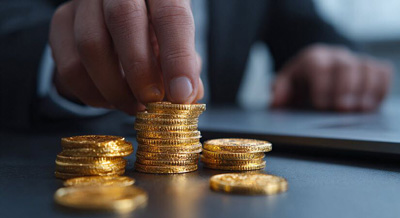 Gold didn’t jump to $4,530 on panic or headlines – it moved because currencies are quietly failing worldwide. Now silver is following. As governments debate gold audits and analysts forecast $100 silver, the real story is simpler – and harder to admit…