|
|
The Palm Oil Conundrum
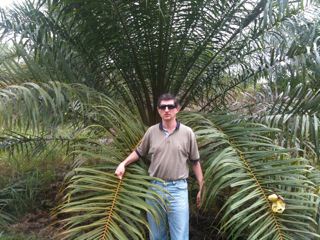
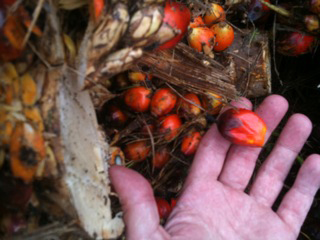
I was especially curious to learn more about Malaysia's palm oil industry during my recent visit there. Once a key ingredient in biodiesel supplied to the West, it later became shunned as details emerged that tropical rain forest was being decimated to make way for palm oil plantations. As a result, Greenpeace has carried out a major campaign to slow the development of the palm oil industry. So which is it? Is palm oil a blessing or a curse? It took a trip to Malaysia to crystallize my thoughts around palm oil, but the truth - as it generally is - is a bit more complex than the sound bites. Signs of the palm oil industry were everywhere in Sarawak, which is the Malaysian state that I visited. There are African oil palms growing everywhere; in plantations, on the side of the road, outside people's houses, etc. There are tankers running up and down the roads filled with palm oil. The port in Bintulu, Malaysia has a tank farm and facilities devoted to palm oil exports. It was apparent to me through talking to people there that the country is proud of this thriving business. But I wanted to better understand the nature of the palm oil industry in Malaysia, so I spent some time with a palm oil grower there. We discussed yields (which he confirmed as around 5 tons per hectare) and cost of production (much cheaper than crude oil). I learned that palm oil is a heavy user of fertilizer (4 kg of nitrogen fertilizer per tree is the number I was quoted), is heavily dependent on manual labor (mostly from Indonesia; I was told that wages aren't high enough to entice Malaysians to harvest oil palm fruits), and I did see signs of erosion where some plantations had been developed. But I was mostly interested in the rain forest controversy. I asked about the grower's thoughts on the campaign to reduce palm oil usage in the West, which it is hoped would slow or stop encroachment into the rain forests. I was told that even if the West refused to buy the palm oil, China would buy all they could make. So the message there was that the industry would continue to develop whether the West boycotts it or not. I also heard from several people that rain forest encroachment had certainly taken place (I kept hearing "it's much worse in neighboring Indonesia"), but that the government was trying to address that. The Malaysian government has created conservation zones (I was told that these were mostly hilly areas that couldn't be planted anyway) in order to preserve some of the habitat being lost. Finally, the grower explained that palm oil was a way for rural poor people to earn some money to be able to feed their families and send their kids to school. While Malaysia is quite developed (it was easy to forget I was in Asia; many areas have a very Western look), an estimated 8% of Malaysians live on less than $2 a day, and I suspect most of those are in rural areas.
The palm oil that is produced in Malaysia is mostly being used for food, but it can also be used for fuel. That is one of the risks going forward that countries that want fuel will outbid those who need food, setting up more food versus fuel issues. Palm oil may be converted to biodiesel, which is the mono-alkyl ester product derived from glycerides (long-chain fatty acids contained in lipids ) in vegetable oils or animal fats. Or it can also be converted to a true diesel replacement by hydrocracking. The hydrocracking reaction "cracks", or fractures the palm oil molecules. The products of this reaction are a hydrocarbon distillate and a propane by-product. Synthetic hydrocarbon diesel produced from biomass in this way is often referred to as ‘green diesel.' Neste Oil in Finland began developing their NExBTL hydrocracking technology in 2002, and in May 2007 inaugurated a plant with a capacity of 170,000 metric tons per year of renewable diesel fuel from a feedstock of vegetable oil and animal fat. In 2009 Neste inaugurated a second plant, and they have two more under construction. One of those plants is a $762 million plant in Singapore, and will provide a significant outlet for palm oil produced in the region. Palm oil represents a difficult dilemma: How does the West address negative social or environmental implications from the development of a palm oil industry (or any industry) that is helping to lift rural people out of poverty by providing an income stream for farmers? Western objectives (saving the rain forests) may be viewed as conflicting with their basic needs (feeding their families and sending their kids to school) - which is of course why globally rain forest continues to disappear. If I look into my crystal ball, I see an industry that will continue to develop due to demand outside of the West, and an issue that governments in Malaysia and Indonesia must address themselves. Based on my observations and discussions, Western boycotts will be ultimately ineffective. For me this is a case of what I would like to see happen (preservation of the rain forests) with what I believe will ultimately happen unless the local governments address this problem themselves (destruction of the rain forests to make way for local economic opportunities). |
 |
 |

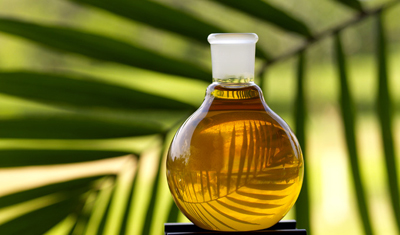 People sometimes ask which biofuels are competitive head to head with crude oil. By competitive, I mean those that can actually compete favorably with oil prices on a level playing field (i.e., they don't require big subsidies or mandates in order to compete). There are two that always come to mind: Ethanol from sugarcane (although less competitive currently due to high sugar prices) and fuel from palm oil (oil derived from the fruits of the