
|
Turning dunes into architecture
Researchers have found a biological treatment that can turn ordinary sand into hard, durable pavement at a fraction of the cost of asphalt pavement. The processes uses a common bacteria called Bacillus Pasteurii to cement grains of sand with calcium carbonate, biologically inducing the production of a road bed made of sandstone. Sandstonge roads increase the pavement reflectance throughout a city by up to 20% resulting in a 2-3 degree Celsius urban air temperature reduction. Sandstone roads slow the rate of ground-level ozone fromation and reduce evaporative emissions from vehicles. Increasing pavement albedo with Sandstone in cities worldwide to an average of 39% could achieve reductions in global CO2 emissions worth ~$400 Billion. Sandstone pavements enhance visibilty at night, reducing lighting requirements, saving enery and increasing safety.
|
 |
 |
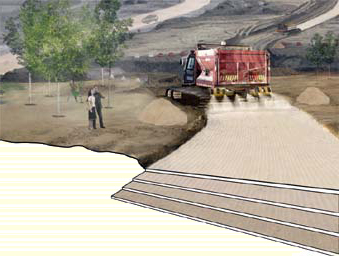 Designer's own words: 'the world is suffering from a material found outside of every doorway. asphalt has been used as the conventional paving material for the last 80 years. extremely toxic chemicals are released in its production, installation, and are off-gassed throughout its lifetime. asphalt greatly contributes to the urban heat island effect, reaching peak temperatures of 48-67 degrees celsius. at current consumption levels, approximately 28,000,000 barrels of crude oil were required to create south korea's 86,990 km roadway system. this is roughly 5 times the amount of oil released into the gulf of mexico. our project proposes the use of an organic process to create sandstone from sand as an alternate paving surface, thereby mitigating the harmful effects of asphalt.'