
September
12
2013
12
2013
|
September 12 2013 |
Corn Ethanol: The Bridge to Nowhere 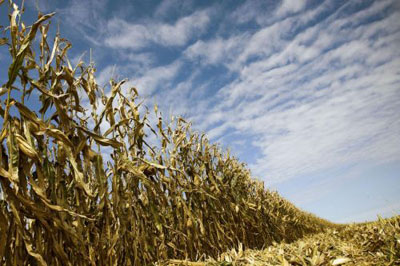
"The alleged "blending wall" – the 10% max of ethanol in gasoline –puts the refiners in a squeeze between falling gasoline sales volume and rising ethanol mandates. In the past the rising mandates could be met by increasing the % ethanol in the blend but now as the wall is hit this option is increasingly less available. Refiners claim they are now forced to buy "Renewable Identification Numbers" ( RIN's) in the open market to meet the mandate even though they can't actually use the fuel." The closest thing to a state religion in America today isn't Christianity – its corn." -The Cato Institute The great danger of confronting peak oil and global warming isn't that we will sit on our collective asses and do nothing while civilization collapses, but that we will plunge after "solutions" that will make our problems even worse. - Jeff Goodell, Rolling Stone As the Washington Post noted in 2011, "ethanol used to be sacrosanct. Corn-based fuels have been subsidized by Congress for more than three decades, ever since the Energy Tax Act of 1978." Now, "even Republicans campaigning in Iowa are no longer averse to criticizing corn ethanol." John ("ethanol is a joke") McCain led the charge back in 2003 when he opined that "ethanol is a product that would not exist if Congress didn't create an artificial market for it no one would be willing to buy it." Yet, the Post concludes that "overall ethanol is likely here to stay. It's just not yet clear what kind of ethanol will prevail." After reviewing the prospects of both corn ethanol and the "advanced" alternatives to corn ethanol, I am not so sanguine. Corn ethanol is in serious trouble for several very good reasons and without it to act as a "bridge" to better alternatives, or better bad ideas as it were, the entire industry is doomed, and frankly, good riddance. Charlie Munger, Warren Buffet's right hand man, once declared that running cars on fuel derived from corn "is about the dumbest idea I've ever seen." The Motley Fool has added, "beyond being just dumb, it is also expensive, with subsidies estimated to cost taxpayers between $6.3 billion and $8.7 billion annually. Plus, high corn prices affect nearly the entire food supply, from corn sweeteners in soft drinks to the feed for chickens and beef and dairy cows. In short, we pay for ethanol at the pump and at the supermarket." It is my guess that serious drawbacks to corn ethanol will take the industry down before the more palatable, but still deeply flawed advanced cellulosic biofuels come online as economic and commercially scalable alternatives to corn – and that may never happen. Corn ethanol, in short, is most probably a bridge to nowhere. Ethanol: The Best Bad Idea We Had The 1990 Clean Air Act Amendments required the addition to gasoline of an oxygenated compound to produce cleaner automobile emissions and thus cleaner air. The reason for using ethanol in gasoline was in part as an oxygenating substance to replace the ill-fated MTBE. MTBE had been leaking from service station tanks into local water supplies fouling the taste so badly as to make the water undrinkable. In 2002, a San Francisco jury declared MTBE a "defective product" and ordered several oil and chemical companies to pay the plaintiffs from a resort community in Lake Tahoe $69 million in damages for ruining its water. Ethanol is 35% oxygen. An oxygenated substance like ethanol catalyzes a more complete burning of the gasoline thereby reducing the amount of carbon monoxide in automobile emissions. About two-thirds of the carbon monoxide emissions come from transportation sources. In urban areas the percentage exceeds 90%. Carbon monoxide is nasty stuff, called the "sneak thief of breath," it can cause everything from a headache to a heart attack so we do want to reduce tailpipe emissions. But, there is another important reason for reducing CO emissions. When CO reacts with sunlight it produces ozone which produces smog and is a general irritant to the eyes and lungs. About 90% of CO emissions are consumed in photochemical reactions that produce ozone Yet, it is imperative to note that while there are public health benefits to be gained by the use of ethanol there are also substantial public health costs, e.g. poisoning of agricultural workers and the general public with pesticides, water pollution from fertilizer run-off, air pollution from power plants that produce the energy needed to make ethanol and so on. It is unlikely that the benefits of reduced CO emissions exceed these "external costs." This is especially true, unfortunately, because part of the reduction in CO emissions from the substitution of ethanol for gasoline is lost because, assuming people drive the same number of miles, they must buy more gas because mileage is reduced 3-4% in a blend that is 10% ethanol. The truth is to get seriously less CO emissions we need to get people to drive less in cars that burn less gas per mile, especially in urban areas and to insure that the transportation fleet has catalytic converters that actually work. The best way to do this is through regulation that establishes stringent mileage standards, enforces CO emissions standards, perhaps even an emissions tax, limitation of downtown driving (as in London), and a carbon tax on gasoline. Energy Independence After the oil shocks in 1973, corn belt states began subsidizing ethanol. The federal government got into the ethanol dog and pony show with Energy Tax Act of 1978 which authorized an excise tax exemption for biofuels, chiefly gasohol (a gasoline blend containing at least 10 percent ethanol). Another federal program provided loan guarantees for the construction of ethanol plants, and in 1986 the U.S. gave ethanol producers free surplus corn. After 9/11 the case for ethanol was linked to the desire for energy independence and national security by producing more fuel domestically. The development of the industry was supported by a generous tax credit of 45 cents per gallon of ethanol blended into gasoline. The ethanol market was also boosted by tariff on imported ethanol that excluded Brazilian ethanol (made from sugar cane) from the U.S. market. From the beginning the program had its critics who saw it as a political boondoggle to win votes in the Midwestern corn belt, and to line the pockets of companies like arch price-fixing corporate criminal Archer Daniels Midland (ADM) which had always been generous with campaign contributions. According to Rolling Stone, ADM had a "close relationship with Sen. Bob Dole of Kansas, a.k.a. 'Senator Ethanol.' During the 1992 election, ADM gave $1 million to Dole and his friends in the GOP. In 1995, the conservative Cato Institute, estimating that nearly half of ADM's profits came from products either subsidized or protected by the federal government, called the company "the most prominent recipient of corporate welfare in recent U.S. history." Critics of ethanol claimed the program would drive up food prices, and would not reduce either dependence on fossil-fuels or foreign oil because production of ethanol used more energy than it produced. David Pimental from Cornell claimed that making a gallon of ethanol used 29 percent more energy than it provided. Moreover, it was alleged that ethanol increased evaporation of volatile organic compounds in the summer thus increasing, not reducing smog. Finally, life cycle analysis revealed that overall, allowing for how ethanol is produced from corn, e.g. diesel fuel used to drive tractors and harvesters, and fossil fuels burned to produce fertilizers and as feedstocks, and as feedstocks and energy to produce pesticides, ethanol actually increased air pollution and greenhouse gas emissions. Indeed, a Duke University study found that "to avoid creating greenhouse gases, it is better to leave land unfarmed in conservation reserves than to plow it up for corn to make biofuel." While criticizing the ethanol program, I am not an advocate in any way of gasoline. Gasoline, a derivative of oil surely shares the name, "the devils excrement" given to oil by its critics from around the world. In 2000, the International Center of Technology Assessment estimated "real cost of gasoline" that is the annual costs (over and above those paid for directly gasoline) to U.S. consumers of oil and auto industry subsides and "externalities" such as increased health care costs, damage to forests, buildings, water pollution and so on to be as much as $800 billion per year. This estimate does not include the enormous military cost of maintaining a geopolitical situation conducive to continued access to oil from around the globe. Nor does it include the environmental damage in other parts of the world or the loss of life due to maintenance of corrupt political regimes in many oil producing countries like Algeria, Ecuador, and Nigeria. While we may not be fighting wars to gain more corn land, ethanol is no bargain. A recent study in the Proceedings of the National Academy of Sciences looking at the total climate change and health costs from fuels found that corn-based ethanol equaled or exceeded the costs of gasoline; the combined climate-change and health costs were $469 million for gasoline, $472 million to $952 million for corn ethanol, and $123 million to $208 million for cellulosic ethanol. Cellulosic ethanol is less costly because its production emits fewer greenhouse gases than corn production and has minimal impacts on carbon sinks, air pollution and food prices. Nevertheless, whether the feedstock is corn or some other biomass the idea of replacing even a significant amount of gasoline with ethanol is absurd. There is simply not enough land mass in the United States to produce this much ethanol from corn or from waste. Gone and Forgotten The ethanol tax credit expired last year (Dec 31, 2011). The tax credit (cost $6 billion in 2011 and a cumulative total of $30 billion) went to gasoline refiners that mixed ethanol with gasoline. The NY Times quoted an ethanol industry spokesman as saying, "we may be the only industry in U.S. history that voluntarily let a subsidy expire. The marketplace has evolved. The tax incentive is less necessary now than it was just two years ago. Ethanol is 10 percent of the nation's gasoline supply." Nice vacuous generalities, but one must still ask why give up a subsidy? First, let's be clear, while the direct subsidy to ethanol is gone there remains a substantial indirect subsidy to ethanol in the form of the massive subsidy to corn. In 2012, corn farmers were paid $2.8 billion in direct payments, crop insurance and price supports. Over the period 1995 to 2012 these payments totaled over $84 billion. The subsidy goes mostly to the top 10% of farmers who rake in 75% of the total. The bottom 62% of corn farmers get nothing! The presence of this subsidy, everything else equal, increases the quantity of corn produced and thereby lowers its price and thus the costs of producing ethanol. Aside from being outrageous inequity, it reveals how thin the support for ethanol might be if such a small number of farmers benefit in the corn states like Iowa, Minnesota, Kansas, Nebraska, and Indiana. Basically, the ethanol subsidy was allowed to expire because it was seen as increasingly indefensible. It was incurring the wrath of the refining industry, which would much rather be selling gasoline than ethanol, the meat and dairy industries that were groaning under higher feed prices, the anti-hunger people who complained about rising food prices, environmentalists who claimed it increased air and water pollution and global warning, and the Tea Party budget hawks who were looking to cut corporate welfare. As Bill Gates put it, in the case of the ethanol subsidy "intelligence won out, it took an IQ of 80 to realize it was a bad idea." Nevertheless, one can fairly ask, "why did the powerful corn-ethanol lobby let the subsidy expire without an apparent fight?" The answer lies in legislation known as the Renewable Fuel Standard (RFS), which creates government-guaranteed growth in the demand for ethanol. Removing the tax credit but keeping the RFS, according to one observer, is like "scraping a little frosting from the ethanol-boondoggle cake. The subsidies were basically chump change." For example, the RFS mandated that at least 37 percent of the 2011-12 corn crops be converted to ethanol and blended with the gasoline that powers our cars. As the Congressional Budget Office wrote back in 2010, "in the future, the scheduled increase in mandated volumes will require biofuels to be produced in amounts that are probably beyond what the market would have produced even if the effects of the tax credits were included." In other words, the mandates have grown so large that the tax credits barely made a difference anymore so they became a sacrificial lamb for the Tea Party budget cutters in 2012. Now and in the future the demand for ethanol will be driven by the mandates, not by the tax credit, or market forces. The Bright Side of the Shale Revolution Like it or not, the ethanol industry is a political animal the future of which is highly leveraged on its continual political support. The largest ethanol producer is ADM, which produces 2/3 of the national supply, and which has a small army of lobbyists, and Archer-Daniels-Midland chairman, Wayne O. Andreas, his family and the company's PAC have given nearly $2.8 million in political contributions in the last decade. Of course, the USDA and the "Lords of the Harvest," Monsanto who supplies GMO corn seed and the pesticides for most of the annual corn crop are powerful friends of ethanol. But there are powerful enemies as well, like the gasoline refiners and the meat, poultry and dairy industries (see their website http://smarterfuelfuture.org), anti-hunger organizations such as the UNFAO, and many environmentalists and advocates for sustainable agriculture. The biggest indirect threat to ethanol is the spectacular explosion of the shale oil industry which has led to cuts in US imports of oil. People like NY Times columnist Thomas Freidman, harangued the nation about how imports of oil from the Middle-East were financing terrorists made ethanol look more attractive and its opponents look unpatriotic. A past director of the CIA, put it thusly, "American farmers, by making the commitment to grow more corn for ethanol, are at the top of the spear on the war against terrorism." Moreover, shale gas and oil reduces our exposure to monopolistic exploitation by OPEC. In 2013, Reuters reported that "technology for extracting oil and gas from shale is reducing dependence on OPEC. OPEC's share of the world market will shrink in 2014 due to the rising supply of U.S. shale oil." The US, imported less than three million barrels of OPEC crude oil a day (mb/d) in February of 2013, the first time that has happened since January 1994, according to US government data. While the shale boom shrinks the US import market, Saudi Arabia and other Gulf states are suffering but somewhat less than others in OPEC, in particular Nigeria and Angola. The shale revolution, whatever devastation it is directly causing, has also had some unforeseen indirect environmental benefits. According to the American Enterprise Institute, it was the shale revolution that is largely responsible for both a reduction in dependence on foreign sources of crude oil, and a reduction in CO2 emissions due to the substitution of America's cheap shale gas for coal to generate the nation's electricity. As one observer had noted "the shale oil revolution is proving a world changer, promising not just lower oil prices worldwide, but geopolitical ripples as America weans itself off oil imports and perhaps loses interest in the Middle East." Unfortunately for the "Lords of the Harvest" and ADM this revolution, as it will undermine ethanol's case based on energy independence, is going to take down ethanol as well. The Renewable Fuel Standard The Renewable Fuel Standard (RFS) program was created under the Energy Policy Act (EPAct) of 2005, and established the first renewable fuel volume mandate in the United States. As required under the EPAct, the original RFS program (RFS1) required 7.5 billion gallons of renewable- fuel to be blended into gasoline by 2012.Under the Energy Independence and Security Act (EISA) of 2007, the RFS program was expanded. In Feb. 2013 the EPA set a mandate of 16.55 billion gallons for renewable fuels (such as ethanol and advanced biofuels known as cellulosic ethanol which is produced from waste cellulose as opposed to grains such as corn) - up 8.9 percent from 2012 and in line with a target set by Congress for 2022. The RFS law requires that refiners e.g., Valero and Exxon Mobil, blend certain amounts of renewable fuels with gasoline each year (a minimum blend of 4%), with the amount determined by their share of the fuel market. With the demand for gasoline falling, blenders have had to increase the percentage of ethanol in the blend in order to accommodate larger mandated absolute quantities of ethanol. Here is the root of a major problem confronting the ethanol industry. The refiners claim there is a real "blend wall" at 10%, that is, a greater percentage of alcohol will damage engines. The alleged "blending wall" – the 10% max of ethanol in gasoline –puts the refiners in a squeeze between falling gasoline sales volume and rising ethanol mandates. In the past the rising mandates could be met by increasing the % ethanol in the blend but now as the wall is hit this option is increasingly less available. Refiners claim they are now forced to buy "Renewable Identification Numbers" ( RIN's) in the open market to meet the mandate even though they can't actually use the fuel. As best as I can figure the RIN is like an air pollution permit. An electric utility must have permits to pollute the air with sulfur dioxide. Each utility is granted a certain number of permits (each for one ton). If it goes over that number it can either reduce pollution (say install a smoke-stack scrubber or switch to low-sulfur coal) or buy a permit in the open market from a utility that did not need all of its permits - whichever is cheaper. Utilities that have reduced their pollution below the level required by the law can sell their excess permits to other companies that wish to continue to pollute above the mandated level. Refiners can meet their mandate either by using ethanol in their blend or buying a permit - an RIN. The basic problem is there is no connection between the mandated use of ethanol and the actual amount of gasoline sold. The quantity of excess RINs declines and, in the face of rising demand as the blending wall is hit, prices begin to rise. As mandates outrun gasoline sales refiners are left to battle over increasingly expensive RINs. Again in the past, RINs were cheap, but in 2013 the price has increased 20 fold (.05 to $1) as stockpiling "against the blending wall" refiners and hedge fund speculators have increased the demand. The higher cost of RINs will in part either hit the refiner's bottom line or be passed on to consumers of gasoline. The fundamental question is, "how real is the blending wall." Friends of ethanol say it is a myth and the EPA agrees. The EPA indeed has ordered that the industry begin to supply E15 gasoline. The refining industry claims the wall it is very real and sued the EPA to prevent the E15 standard from becoming operational. The EPA won. The prospects of the ethanol industry were brightened by the US Supreme Court in June of 2013 when it upheld the EPA's limited approval of E15 (fuel blended with 15 percent ethanol). In 2009, the ethanol industry petitioned EPA to approve an increase in the amount of ethanol allowed to be blended in gasoline from 10 percent to 15 percent. In 2010, EPA approved the use of E15 fuel for model year 2007 and later vehicles. In 2011, the Agency extended that approval to include 2001 and later models. The fact that the Supreme Court has denied the request to rehear the challenge to EPA's approval of E15 was a major victory for the ethanol industry. After extensive testing, the EPA claims that E15 can be used by more than 75% of the light duty vehicles on the road today, representing more than 85% of the unleaded fuel sold. The fact is since the adoption of the expanded RFS in 2007 there has been absolutely no question that blends above E10 would be needed to achieve the RFS goals. There are, however, substantial obstacles to moving to that standard any time soon. The gasoline industry is strongly opposed and refuses to invest in the new infrastructure needed to go to E15. But this is not surprising, as one analyst put it, "Remember, refiners don't make ethanol, so they're not really all that happy about making E15. What they want to do is make gasoline, because that's what they make money on." Many firms in the auto industry have said that, despite the EPA claims that E15 is safe, it would not honor warranties on cars that use E15 gas. Piling on, AAA has warned that the results of allowing E15 to be sold at the pump will be disastrous; millions of Americans may have their vehicles damaged and warranties voided. "AAA believes it is both premature and irresponsible to sell E15 to consumers while these issues remain unresolved." Ethanol is considerably cheaper than gasoline so E15 is indeed less expensive, but in addition to the engine damage potential, it also gets significantly lower MPG, about 3-4% less, than pure gasoline fuel (ethanol has about 33% less energy). This may not sound like much but one estimate claims this loss of efficiency would cost drivers as much as100b miles a year, or $350B. Thus, everything considered consumers may not realize any savings. Ethanol and biodiesel producers praised the EPA for preserving a program they say is increasing American energy independence and reducing greenhouse gas emissions. Refiners, on the other hand, say they're going to press Congress to repeal all renewable-fuels legislation, claiming its usefulness as an alternative domestically produced fuel has diminished with the boom in shale oil production. A website produced by the petroleum and meat industries avers, "But what makes the ethanol charade even more perverse is that the entire rationale for ethanol has evaporated. For decades, the bogeyman of foreign oil has provided a handy canard that the ethanol industry could use to justify its subsidies and mandates. Foreign energy is becoming increasingly irrelevant to the United States." Also opposed are those who are against industrial agriculture and its nitrogen-fed, pesticide-protected, soil-destroying GMO corn that uses more, dirty, global warming fossil-fuel energy than the putatively "clean" energy it produces. Amartya Sen, a Nobel Prize-winning economist who is a well-known advocate of the poor, sees ethanol as a threat to feeding the poor, has declared that, "ethanol use does little to prevent global warming and environmental deterioration, and clear-headed policy reforms could be urgently carried out, if American politics would permit it." Jeffery Sachs of the Earth Institute has complained that "The U.S. biofuels program is a huge blow to the world food supply." People like Sen and Sachs might support ethanol if were produced from materials other than corn, e.g. cellulosic ethanol, and made with energy from non-fossil-fuels. As noted above, US ethanol producers are protected by a tariff wall intended to exclude Brazilian ethanol for good reason, at least as far as the protected "infant industry" is concerned. We would get more bang for our buck from Brazilian ethanol. Brazilian ethanol is made from sugar cane and has an energy balance of 8-to-1, that is, when you add up the fossil fuels used to irrigate, fertilize, grow, transport and refine sugar cane into ethanol, the energy output is eight times higher than the energy inputs. That's better than gasoline which has an energy balance of 5-to-1. In contrast, the energy balance of corn ethanol is at best only 1.3-to-1 and at worst about .7 so either way the net energy contribution is about the size of a rounding error. Ethanol is also a water-guzzler and a water polluter. The World Policy Institute calculated that it while it takes 32 gallons of water to produce enough oil to drive round-trip from New York to Washington DC. The biofuel needed to make the same drive requires more than 35,000 gallons of water. It would be very foolish, in this warming, drought-prone world, to make the nation's energy system dependent on such a water-guzzler. On top of this waste, the soil and fertilizer runoff from industrial cornfields on its shores, silts up the Mississippi River and, due to eutrophication, creates a vast dead zone in the Gulf of Mexico every summer. One EPA official declared that the the program is "under attack," likening the oil industry's campaign against the program to a cold-war era stand-off between the United States and the Soviet Union. The petroleum industry, he said, "has gone to Defcon 4, which is often described as a state of increased vigilance and intelligence gathering in preparation of an incoming threat that could lead to all-out war. Not surprisingly, the resistance is being led by the oil industry and the meat producers. If ethanol survives this political onslaught it will be a great testament to the corruption of US politics in general, and the lobbying power of ADM and Sen. Chuck Grassley (R-Iowa) in particular. The Dismal Economics of Corn Ethanol Corn based ethanol production has economic problems beyond those articulated by environmentalists and those in favour sustainable agriculture. First, it is manifest that ethanol has become something of a "market maker" in the corn market. In 2010, Salon reports, "corn processors turned 10 times as much American-grown corn into ethanol as into high-fructose corn syrup. That same year, for the first time, our addiction to fuel outstripped our addiction to hamburgers — more corn went into ethanol than into feed for livestock." Cargill CEO Gregory Page has claimed that the Renewable Fuel Standard was making business difficult for his company and others by driving up the cost of food; "we see 3 or 4 percent declines in supply of corn lead to 40 to 50 percent increases in corn prices, I think the mandates are what drives that price elasticity, which I think needs to be addressed." As the industry expands it drives up the price of corn and increases the wrath of the meat industry, and food consumers, but also raises its own cost of production. As it stands even now ethanol's economic viability falls as corn prices rise as the ongoing drought in the American Midwest has revealed. Increasing costs and dwindling demand have caused some 10 percent of the nation's ethanol plants to halt production in 2013. The USDA has noted that now record-high corn prices could spike by as much as 19 percent throughout 2013. The ethanol industry consumes around 5 billion bushels of corn annually. So as one study found "It might seem obvious that the increased demand for ethanol would have had some effect on corn prices." According to our calculations, the study continues, as of 2012, the increase in ethanol demand over the last 12 years could have driven corn price up by a maximum of only $1.68 per bushel from the price of $1.85 in 2000." The study claimed that ethanol's share in the increased spending for corn over the period amounted to about 44 percent of the total demand for corn the balance coming from other sources of demand. I should note that this industry-friendly study did its best to minimize the effect of the industry on the price of its major input by pointing to other factors that may have driven up prices, but the numbers are clear: the expansion of the ethanol industry after 2000 caused the price of corn to nearly double ($1.68 added on to $1.85). In short, while one can't blame the entire increase the price of corn, and hence of food on ethanol, it is clear that growing ethanol demand for corn will undermine its profitability by driving up the price of corn. While it is true as the study claims ethanol was not the dominant corn price driver" in those years, but one cannot deny that everything else equal ethanol demand has a substantial effect on corn prices that will only get larger as the industry grows. Phantom Fuels: The Dismal Economics of Cellulosic Ethanol It has been argued that corn-ethanol is CO2 neutral because the CO2 released when it is burned is equal to the CO2 captured by the plants as they were growing. Simply put, this is nonsense. Plowing the earth to plant corn releases CO2 from the soil, as much as30-50%. Should, the lands under the plow to make corn be allowed to revert to perennial grasses that feed animals directly vast amounts of carbon would be sequestered at least as much as would be sequestered should these areas be reforested. Cellulosic perennial plant species, such as switchgrass, are better for not only curbing carbon emissions and actually reducing the atmospheric carbon burden because they don't require annual plowing and planting that releases carbon from the soil. While conventional corn farming can remove 30 to 50 percent of the carbon stored in the soil, a single planting of a cellulosic species will continue growing and producing for years while sequestering ever more (30-50%) carbon in the soil. But to date there appears to be no commercially viable technology to extract ethanol from cellulose. Several attempts have failed to produce any real ethanol. According to one critic, because plants have evolved defense mechanisms to prevent the cellulose from being easily broken, the chemistry and physics are formidable obstacles working against the success of cellulosic ethanol." "I will state in no uncertain terms, he goes on, "that I don't believe it can ever be mass-produced more cheaply than corn ethanol, and that industry's financial troubles are well-documented." Even if the chemistry problems could be solved there is there the greater expense: Estimated production and capital costs for cellulosic biofuel production are significantly higher than for corn ethanol. It is estimated that costs for a 100 million gallon biochemical conversion plant for cellulosic ethanol at $320 million are "more than three or four times those for corn ethanol plants" that is, about "$2.50 to $4 per gallon of capacity to build a typical cellulosic-ethanol plant. That compares with $1 to $1.50 for a corn-ethanol plant." Finally, one expert has argued that point that one of the biggest challenges to any process based on a waste product is the "tyranny of distance" that is "securing a large and steady local supply of biomass to run through the plant. As the nearby biomass is consumed, trucks have to travel farther to bring biomass to the refinery. This adds to the energy inputs, and worsens EROEI. If a refinery needs tons of biomass to produce fuel by the end of the year you're driving your truck a long way to get that wheat or corn stover." A 2012 report from the National Academy of Science declares that "currently, no commercially viable biorefineries exist for converting cellulosic biomass to fuel." The report cites "the high cost of producing cellulosic biofuels compared with petroleum-based fuels and uncertainties in future biofuel markets." The failure to produce cellulosic ethanol has come despite a law imposing mandates on oil companies to blend cellulosic fuel into conventional gasoline. In 2010 the mandate was 100 million barrels, rising to 250 million in 2011 and 500 million in 2012. By the end of this decade the requirements would leap to 10.5 billion gallons a year. However, when these mandates were established, no companies produced commercially viable cellulosic fuel and as yet none do. Because there was no cellulosic fuel available, oil companies have had to purchase "waiver credits"—for failing to comply with a mandate to buy a product that doesn't exist. In 2010 and 2011, the EPA has forced oil companies to pay about $10 million for these credits. As summarized by the Wall street Journal: "Congress subsidized a product that didn't exist, mandated its purchase though it still didn't exist, is punishing oil companies for not buying the product that doesn't exist, and is now doubling down on the subsidies in the hope that someday it might exist." The ethanol industry, of course, rejects the "phantom fuel" moniker. "Cellulosic biofuel has so far attracted more than $1 billion in private investment, and companies are working on projects in more than 20 states. For the first time ever, producers last year generated 21,000 gallons of cellulosic biofuel, according to EPA's electronic data system for the renewable fuel standard. "Cellulosic gallons are real." The latter statement was made just after, under court order, the EPA declared that, in 2012, refiners would not have to purchase 78-cent credits (RINs) for the 8.65-million-gallon requirement for cellulosic biofuel, and it is expected that mandated purchases for 2013 are expected to be challenged in court. The Dismal Political Prospects of Ethanol In April of 2013, a House Bill ordered a review of ethanol. The Bill was introduced by Congressman Lamar Smith (R-TX). Smith represents Texas, a big oil drilling and refining state that stands to benefit enormously from the downfall of ethanol. In June of 2013, Senators John Barrasso (R-WY), Mark Pryor (D-AR), and Pat Toomey (R-PA) introduced S. 1195, a bill to repeal the RFS. S. 1195, the Renewable Fuel Standard Repeal Act, is companion legislation to H.R. 1461, the Renewable Fuel Elimination Act, which was introduced in April by Representative Bob Goodlatte (R-VA). It has no chance of passing right now, but it hardly a dead letter. The Economist reports that in December 2010 Chuck Grassley, a Republican senator from Iowa, warned: "When it was Big Oil fighting biofuels, I don't think there was a problem. But when you have Big Oil, Big Food, environmental groups, some agriculture groups up against biofuels, you're in trouble. Or in more trouble, I should say." The case against corn-based ethanol is very strong and should opponents of corn ethanol prevail, it will take down the entire ethanol industry. However novel any new technology might be it cannot scale-up to produce enough ethanol to replace corn-based ethanol and thus the entire mandate program will go down and the "market" for ethanol, however produced will vanish. As one government official put it, "to continue advancements towards cellulosic ethanol and too make it more cost competitive, continued investment in corn ethanol is necessary. You can't really get to the ultimate goal of cellulosic without this corn ethanol bridge. Robert Rapier, an oil-engineer has spent years studying cellulosic ethanol. Rapier claims that the difference between ethanol from corn and ethanol from cellulose is "like the difference between traveling to the moon and traveling to Mars." Even should the engineering hurdles be overcome, there is still the problem of land use to grow the feedstock. Rapier calculates that replacing fifty percent of our current gasoline consumption with cellulosic ethanol would consume thirteen percent of the land in the United States - about seven times the land currently utilized for corn production. The unfortunate facts are that thousands of barrels of ethanol now sit in storage because there is not enough gasoline in the market to blend it with — and blends calling for a higher percentage of ethanol have yet to find a market. Advanced biofuels that use waste like corn stalks and wood chips have yet to reach commercial-level production. Finally, in the world of shale gas and oil the political winds are shifting against what was always a very bad idea. Indeed, this study reveals that in addition to its own deleterious impacts on corn prices, the industry is also vulnerable to price spikes caused by the actions of other demanders of corn, notably speculators, weather and the demand for gasoline. It is an ugly prospect. In 2013, the NY Times reports, "nearly 10 percent of the nation's ethanol plants have stopped production over the past year, in part because the drought that has ravaged much of the nation's crops pushed commodity prices so high that ethanol has become too expensive to produce. Moreover, a dip in gasoline consumption (down one million gallons per day compared to 2007) has compounded the industry's problem by reducing the demand for ethanol." Todd Sneller, the administrator of the Nebraska Ethanol Board, quoted in the NY Times recently lamented that "the growth opportunity that existed some years ago is still out there in theory, but the reality is that it's going to take an awful lot of time, money and political battles to realize that opportunity." It will be an uphill political battle because as Bill Chameides, Dean of Duke's School of the Environment, wrote the "ethanol mandate is on the ropes," and "it could be that the Congressional romance with ethanol will turn out to be a perfect love gone wrong." James Starkey
I am a Professor Emeritus of Economics at the University of Rhode Island. I like to explore the domain where the social, economic and ecological intersect. As I age and witness evermore of the "human follies" I grow more evermore pessimistic and grumpy.
|
|---|
Send this article to a friend:
 |
 |
 |