SpaceX Files For Nasdaq IPO Under Symbol SPCX
Tyler Durden
 As expected, SpaceX filed its S1. As expected, SpaceX filed its S1.
The stock is expected to list on Nasdaq and Nasdaq Texas under the ticker “SPCX.”
No specific share count, price range, or total offering size is finalized yet (placeholders are used).
But, with expectations of a $1.5 trillion market cap, that means SPCX will trade at a 77x LTM Revenue multiple!
Mission and Overview
-
SpaceX's mission is to make life multiplanetary, advance scientific understanding of the universe, and extend consciousness to the stars. It positions itself as a vertically integrated builder across Space, Connectivity (Starlink), and AI (via xAI acquisition).
-
The company has revolutionized space access with reusable rockets (Falcon family, Starship development), built the world's largest LEO satellite constellation for broadband, and is scaling AI compute and frontier models (Grok) with real-time data from X.
Key Corporate Details
-
Dual-class structure: Class A (1 vote/share) and Class B (10 votes/share). Elon Musk (founder, CEO, CTO, Chairman) will retain dominant voting control post-IPO (majority of the board via Class B and overall voting power), making SpaceX a “controlled company” under Nasdaq rules.
-
Basis of presentation: Financials include retrospective recasts for the xAI acquisition (Feb 2026) and X Holdings (via xAI, 2025), plus a 5-for-1 stock split (May 2026).
-
Underwriters: Led by Goldman Sachs, Morgan Stanley, BofA, Citigroup, J.P. Morgan, and others.
Consolidated Financial Highlights (preliminary/selected):
-
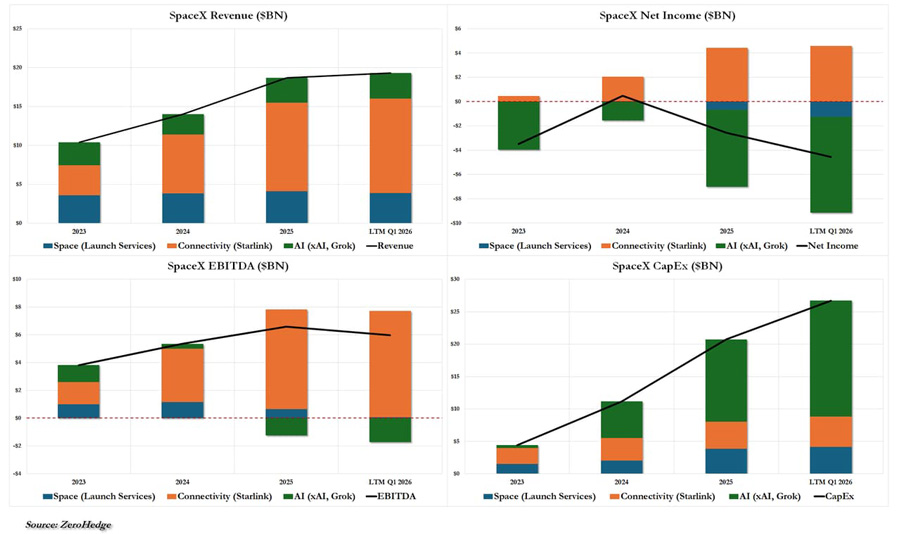
Q1 2026: Revenue $4.69B, operating loss $1.94B, Adjusted EBITDA $1.13B.
-
FY 2025: Revenue $18.67B, operating loss $2.59B, Adjusted EBITDA $6.58B.
-
Heavy capex (especially AI) and Starship R&D; Starlink (Connectivity) is the current profit engine.
Business Segments (as of/through Q1 2026 and FY 2025)
Space (launches, Dragon, Starship development):
-
Dominant global launch provider (>80% of mass-to-orbit in recent years, >99% Falcon success rate).
-
Key vehicles: Falcon 9 (reusable, ~23t to LEO), Falcon Heavy (~64t), Dragon (cargo/crew to ISS), Starship (in testing, targeting full reusability and massive scale).
-
Revenue: $619M (Q1 2026), $4.1B (2025). Still investing heavily in R&D/Starship.
Connectivity (Starlink):
-
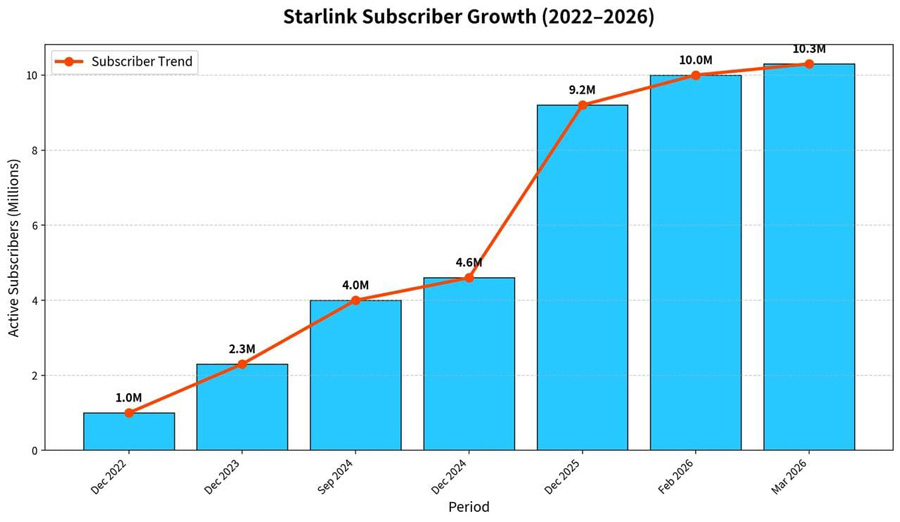
~9,600 broadband/mobile satellites in LEO (~10.3M subscribers across 164 countries/territories as of Mar 31, 2026).
-
High-speed, low-latency broadband (median ~225 Mbps peak for residential); expanding enterprise, government, maritime/aviation, and satellite-to-mobile (direct-to-phone, ~650 dedicated satellites, ~7.4M devices in ~30 countries).
-
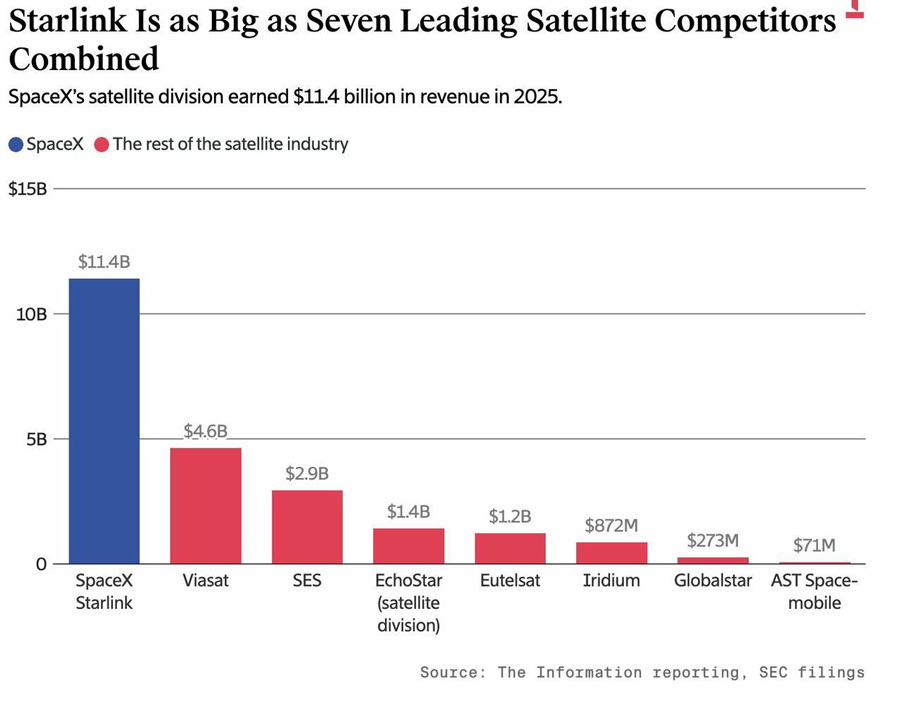
Strong growth: Revenue $3.26B (Q1 2026), $11.4B (2025, +~50% YoY); highly profitable at segment level.
AI (xAI/Grok/X integration):
-
Gigawatt-scale terrestrial AI training clusters (e.g., COLOSSUS); plans for orbital AI compute satellites (using solar power, starting ~2028).
-
Grok frontier models (truth-seeking, strong scientific reasoning benchmarks); integrated with X (~1.3B supported accounts, 550M MAUs, hundreds of millions of daily posts).
-
Revenue $818M (Q1 2026), $3.2B (2025), but heavy losses due to compute/infrastructure investments.
Here's the financials visualized (xAI is represented by the green slabs)...
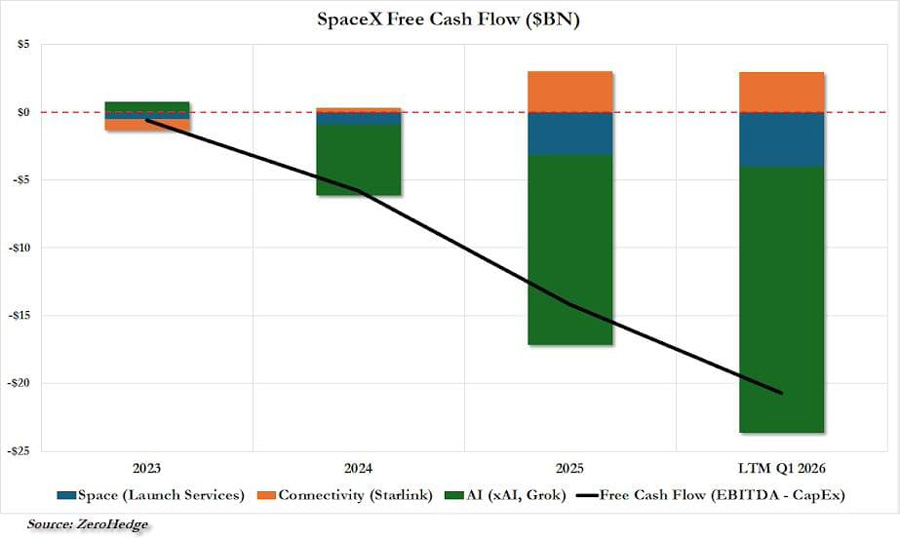
Free cash flow struggling under the weight of that giant green slabs...
So, xAI is the giant money suck while Starlink keeps the engine running (but despite breaking out in 2025, Starlink user growth seems to be slowing a little):
Finally, one thing that stood out was that Anthropic is paying xAI $1.25BN per month (through May 2029) to utilize 'Colossus' for AI compute.
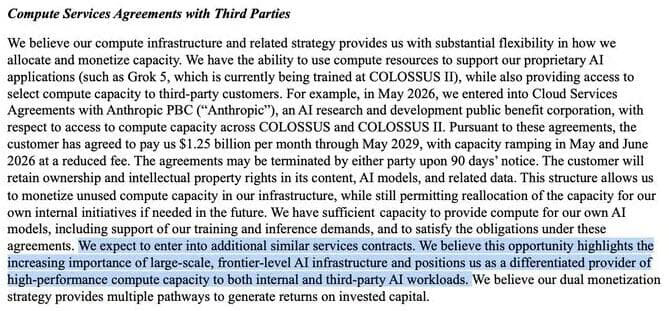
Musk took to X to explain further his vision for this segment:
As the recently expanded partnership with Anthropic demonstrates, SpaceX is offering AI compute as a service at significant scale.
We are in discussions with other companies to do the same.
Over time, especially with orbital data centers, we expect to serve AI at extremely high scale.
If you build it (in space), they will come?
Read the full 270-page S1 here...
* * *
Ahead of Thursday's scheduled launch of SpaceX's Starship V3 rocket, there are indications that Elon Musk's rocket and AI company could release its IPO filing as soon as this afternoon, giving investors, analysts, and competitors a rare look inside the finances and ownership structure of Musk's space empire.
On Tuesday, The Wall Street Journal reported that Goldman Sachs secured the lead-left role on SpaceX's upcoming IPO, positioning it as the top banker on what could become one of the largest public offerings in history.
SpaceX is expected to seek a valuation of up to $2 trillion, raising an estimated $75 billion to help fuel its AI and Starship rocket-launch ambitions after merging with xAI and pursuing plans for orbital data centers.
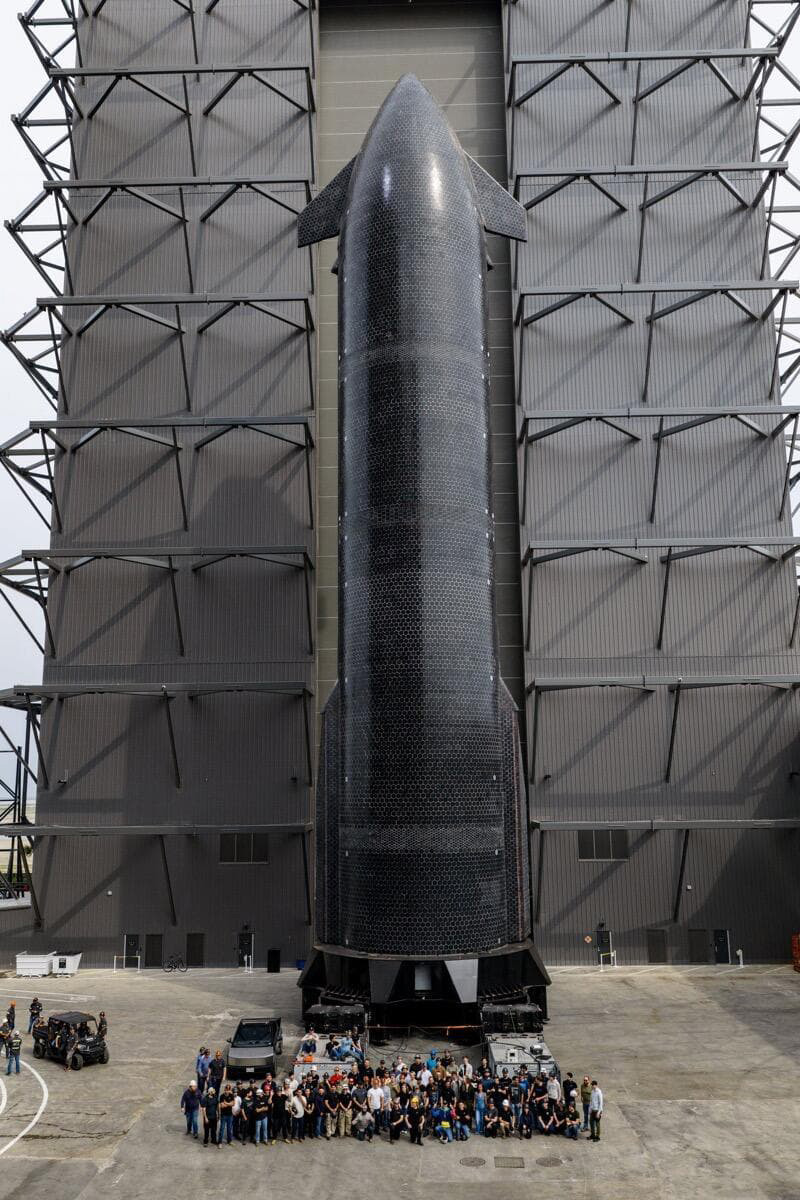
The company confidentially filed IPO documents with the SEC in early April, and its public S-1 filing is expected at any moment today.
Last Friday, Reuters reported that the IPO is set for pricing on June 11, followed by a June 12 debut.
The ticker "SPCX" leads the Polymarket bet, "What will SpaceX's public ticker be?" at 91% by lunchtime in New York.
Will SpaceX's public ticker be another ticker?
Yes 91% · No 9%
View full market & trade on Polymarket
Elon Musk virtually attended a summit in Tel Aviv on Monday, where he said, "We've got to get the SpaceX IPO stuff going here pretty soon." Those comments put a bid into AST SpaceMobile, EchoStar, and Rocket Lab.
Bloomberg's Eric Johnson outlined what exactly to look for when the S1 drops:
-
The company, known formally as Space Exploration Technologies Corp., is expected to pick Nasdaq as its listing venue, which would set it up for potential inclusion in the Nasdaq 100.
-
The IPO filing could include key financial details like revenue and net income across its launch, Starlink and artificial intelligence businesses, as well as capital spending on key programs like its colossal Starship rocket.
-
key programs like its colossal Starship rocket * SpaceX's filing is set to reveal the hierarchy of the banks running the deal. Goldman Sachs Group Inc. and Morgan Stanley are the lead firms, with Bank of America Corp., Citigroup Inc. and JPMorgan Chase & Co. also working on the transaction, people familiar with the matter have said.
-
SpaceX will list its largest shareholders, including Musk himself and Alphabet Inc.'s Google; its investors also include Valor Equity Partners, Sequoia and Andreessen Horowitz.
-
We should find out how voting control of the company will be set up. SpaceX is considering a dual-class share structure, people with knowledge of the plans have said, which could allow Musk to maintain control of the company even with a minority stake.
-
The filing likely won't include information on the price range per share, number of shares offered, shares outstanding or precise shareholdings. Those usually come at the start of formal marketing, which could be as early as June 4, ahead of pricing as soon as June 11, Bloomberg News reported.
The Information's Cory Weinberg published five charts making sense of the IPO numbers:
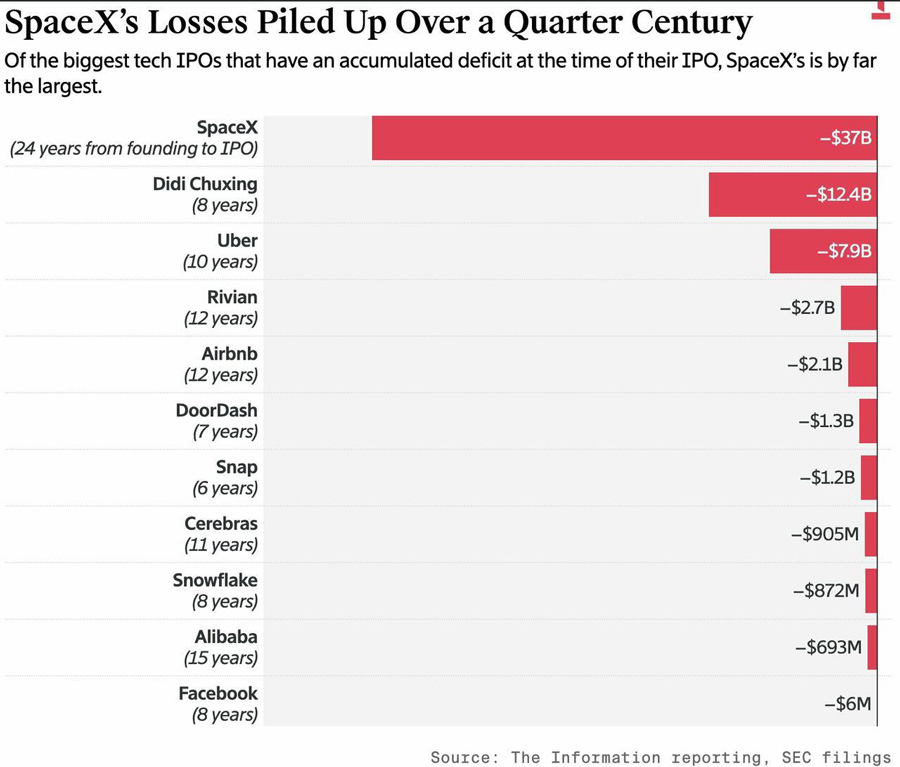
1. SpaceX is expected to file its S-1 publicly as soon as tomorrow.
We've reviewed parts of the draft prospectus and tried to make sense of the numbers. Here are 5 charts that explain the company before the largest IPO in history goes live.
2. The company has accumulated $37 billion in losses over its 24-year history — larger than what the next 10 major loss-making tech IPOs *combined* had to disclose at their offerings.
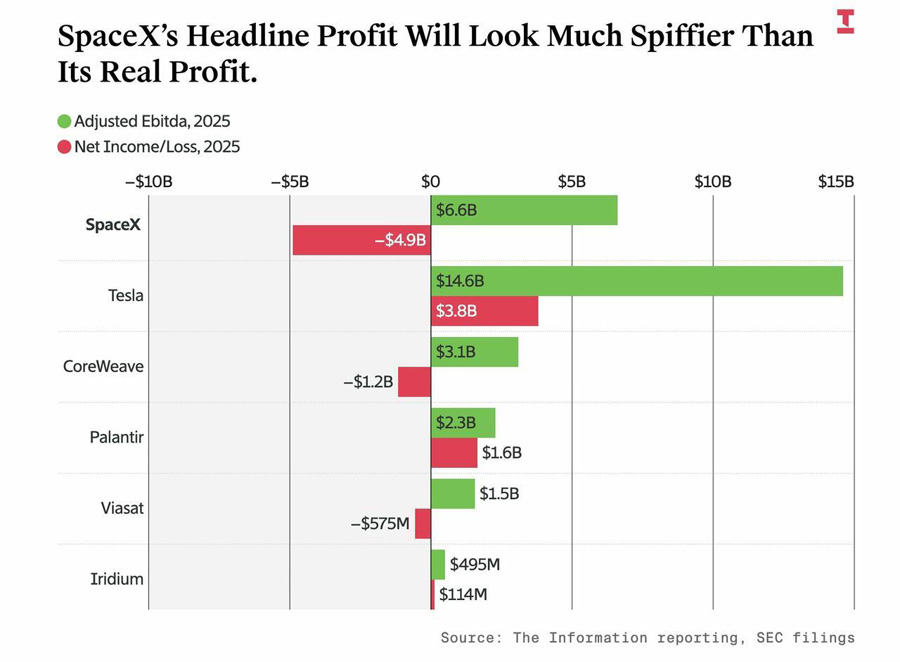
3. SpaceX will tell investors it has $6.6 billion in 'adjusted' profit last year. Under standard accounting, it lost $4.9 billion.
That gap between headline profit and actual profit is larger than at CoreWeave, Viasat, or Tesla.
4. Starlink dominates. The satellite internet business generated $11.4 billion in revenue last year — more than 7 leading publicly traded satellite communications operators combined.
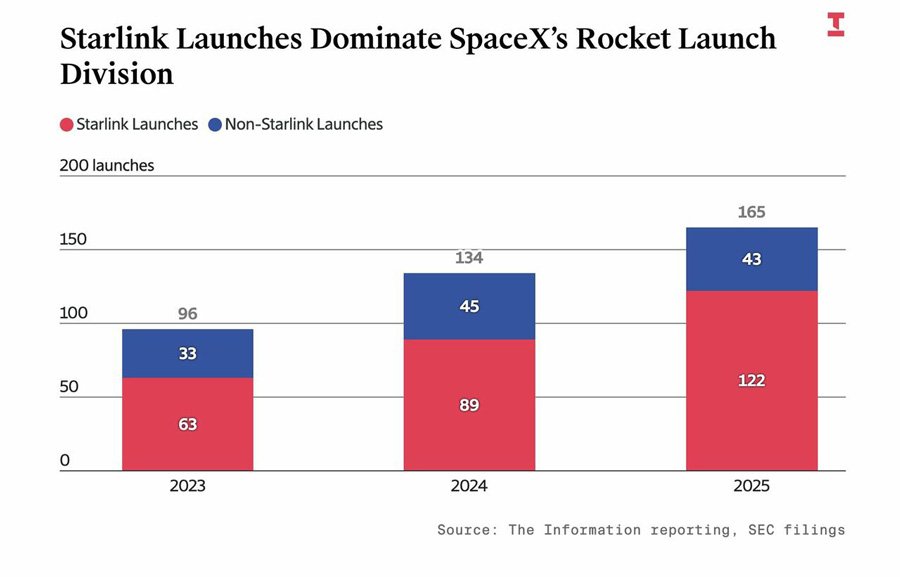
5. The Space segment — SpaceX's launch business — grew only 8% last year. That's because about three-quarters of Falcon 9 launches were for internal Starlink missions rather than outside customers.
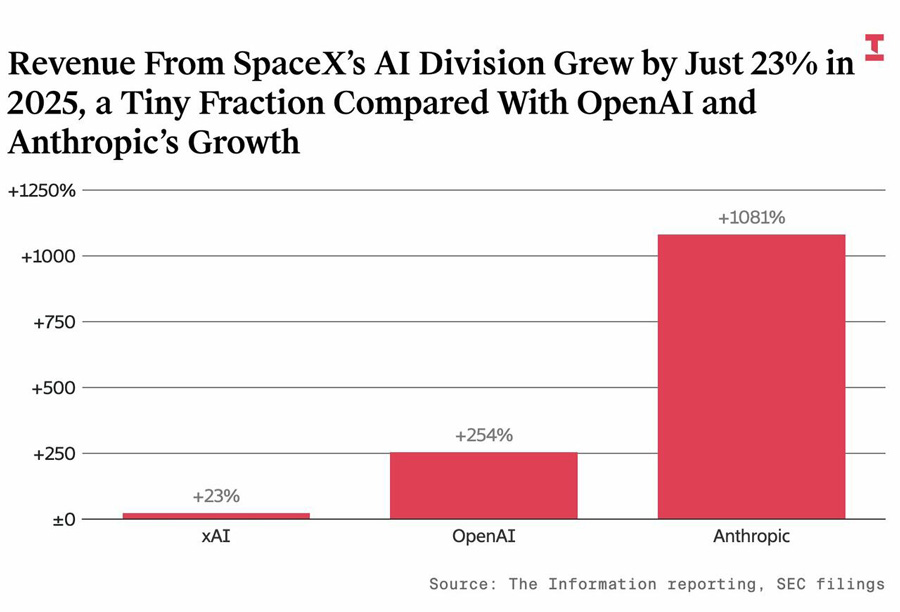
6. The AI segment (X plus xAI) grew 23% last year, compared to over 1,000% for Anthropic and nearly 300% for OpenAI. xAI was slowest-growing of the major AI labs.
View Weinberg's report here.
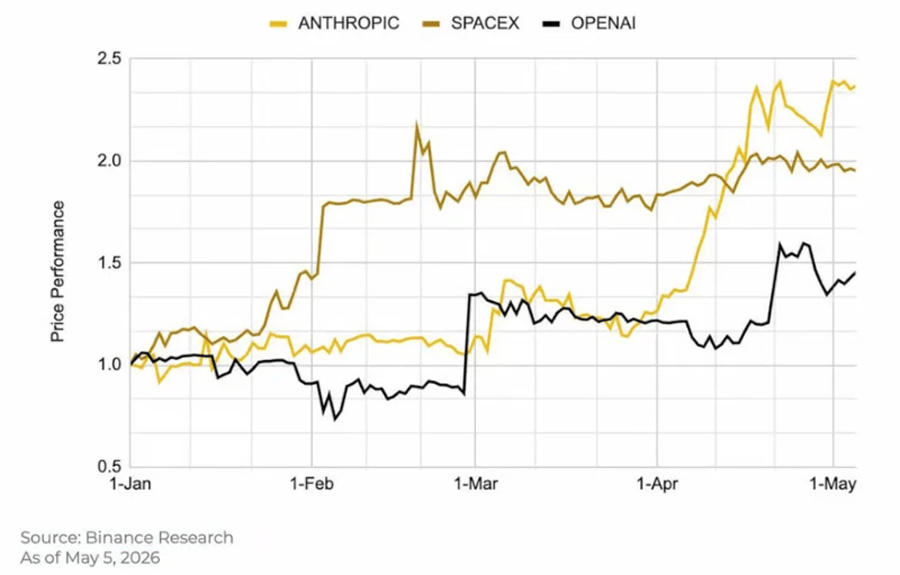
With SpaceX set to be the first out of the gates among the three giant tech IPOs, we can't help but wonder how well the record high market will absorb such supply (and what will be sold to make room for it)...
Shares of Goldman Sachs and Morgan Stanley were up around 4% during the lunch hour. These banks are expected to be the lead managers on the IPO.
 our mission: our mission:
to widen the scope of financial, economic and political information available to the professional investing public.
to skeptically examine and, where necessary, attack the flaccid institution that financial journalism has become.
to liberate oppressed knowledge.
to provide analysis uninhibited by political constraint.
to facilitate information's unending quest for freedom.
our method: pseudonymous speech...
Anonymity is a shield from the tyranny of the majority. it thus exemplifies the purpose behind the bill of rights, and of the first amendment in particular: to protect unpopular individuals from retaliation-- and their ideas from suppression-- at the hand of an intolerant society.
...responsibly used.
The right to remain anonymous may be abused when it shields fraudulent conduct. but political speech by its nature will sometimes have unpalatable consequences, and, in general, our society accords greater weight to the value of free speech than to the dangers of its misuse.
Though often maligned (typically by those frustrated by an inability to engage in ad hominem attacks) anonymous speech has a long and storied history in the united states. used by the likes of mark twain (aka samuel langhorne clemens) to criticize common ignorance, and perhaps most famously by alexander hamilton, james madison and john jay (aka publius) to write the federalist papers, we think ourselves in good company in using one or another nom de plume. particularly in light of an emerging trend against vocalizing public dissent in the united states, we believe in the critical importance of anonymity and its role in dissident speech. like the economist magazine, we also believe that keeping authorship anonymous moves the focus of discussion to the content of speech and away from the speaker- as it should be. we believe not only that you should be comfortable with anonymous speech in such an environment, but that you should be suspicious of any speech that isn't.
www.zerohedge.com
|