Send this article to a friend:
May
01
2026
|
Send this article to a friend: May |
Fort Knox Gold Scandal?
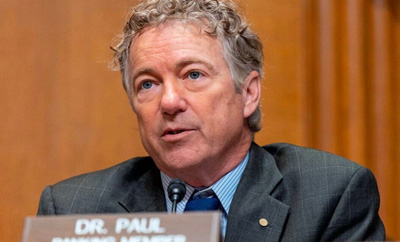
How the “Rand Plan” is DifferentOne may ask how this plan differs from other spending restraint plans. Notice that the bill does not single out specific areas for spending reduction, such as President Trump’s failed DOGE plan. The bill is an across-the-board reduction, which leaves each federal agency to decide where and what to cut. For example, the Pentagon would have its budget reduced by six percent, forcing it to allocate funding among its major commands. The same would be the case with Social Security, Medicare, the EPA, etc. No agency would be exempt, although we can assume that there will be a great uproar, of course.
But Congress would not have to negotiate what to cut. In fact, it’s possible that nothing would be cut out entirely. The responsibility would be with those who manage the programs who, after all, should be most familiar with the exact expenditures in their departments. One may say that Congress is neglecting its responsibilities, and there is nothing that prevents Congress from increasing expenditures or defunding anything as long as the six percent total reduction is met. One could envision public outcry over revelations that some high priority programs within cabinet-level departments were suffering cuts in order to save what the vast majority would consider frivolous expenditures. But this negotiation would be conducted within departments themselves and not at the congressional level. “Subsidiarity” Is the Key to Good Decision-Making Currently, there are precedents for how industry is adjusting to shortages caused by the war in the Middle East and President Trump’s tariffs. For example Al Jazeera and the Wall Street Journal report that helium from the Middle East—a commodity crucial to many industries—is in short supply and under allocation by importers to their customers. Importers have declared force majeure, forcing them to decide how to economize use of the reduced supply. One can see the advantages of this process, called subsidiarity. Forced allocations are conducted most efficiently and effectively at the lowest operating level possible. This is very common and not always related to war. Supply availability is subject to all kinds of factors. There is every reason to trust that this method of resource allocation, which is a normal one for business (and even households), would work just as well for government programs. Congress allocates money broadly to cabinet-level departments. These department heads allocate money to managers of programs within their departments. The politicking for funds occurs within departments and not at the congressional level. It is not reasonable to expect that Congress can efficiently and effectively know which of the hundreds and probably thousands of programs to cut. That is the responsibility of the various department heads and their subordinates. Uncertainty and Scarcity Austrian School economists remind us that the world is ruled by uncertainty and scarcity. Recipients of public money would be forced to adapt to an increasingly-scarce resource input, one resource input among many. How these recipients adapt to decreased public money is something with which we all deal every day. None of us have unlimited or guaranteed resources. That is the nature of the human condition. There is no reason that the government and its agencies should be exempt from this fact of life.
Patrick Barron is a private consultant to the banking industry. He has taught an introductory course in Austrian economics for several years at the University of Iowa. He has also taught at the Graduate School of Banking at the University of Wisconsin for over twenty-five years, and has delivered many presentations at the European Parliament.
|
Send this article to a friend: