Send this article to a friend:
May
06
2026
|
Send this article to a friend: May |
How Government Debt Reshapes the Economy
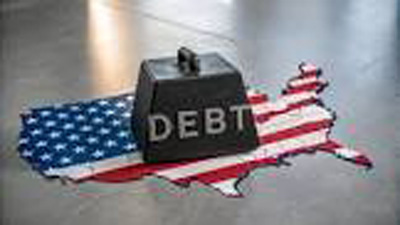
At its core, the persistence of rising government debt is not an accident but a function of incentives. Programs like Social Security, Medicare, expanding defense budgets, and repeated stimulus packages all carry enormous long-term costs, yet they remain politically untouchable because they deliver immediate, visible benefits. Borrowing allows those costs to be pushed forward, shielding current voters while shifting the burden onto future taxpayers who had no say in the decision. The result is a system where each generation inherits a larger obligation than the last, not through sudden crisis, but through a steady accumulation of promises that are easy to make and increasingly difficult to fund. The government does not produce goods or services to sell like a business. It raises money primarily through taxes, and when those revenues fall short of its spending, the options are limited: cut its spending, raise taxes, or borrow more. Cutting spending risks disrupting millions of people who rely on government programs, while raising taxes is politically unpopular and immediately felt. That leaves borrowing, typically through Treasury auctions, as the path of least resistance. Over time, this creates a system where deficits are not an exception, but the default, steadily increasing the amount of debt that must be financed. The pressure is already showing up in how expensive it has become to borrow. Treasury yields have been moving higher, which simply means investors are demanding more interest to lend money to the government. As those yields rise, so does the cost of financing existing debt, putting increasing strain on the federal budget. Interest payments are now approaching one trillion dollars a year, turning what was once a manageable expense into one of the fastest-growing parts of the government spending. While tax revenue still exceeds these costs, the trajectory is clear—more and more resources are being diverted just to service past borrowing, leaving less flexibility for everything else. That dynamic leaves the Federal Reserve in an increasingly difficult position. If interest rates remain elevated, the cost of servicing government debt continues to rise, placing even greater strain on the federal budget and financial system. But if rates are lowered too quickly, the risk of reigniting inflation returns, further eroding purchasing power. This didn’t happen on its own, it’s the result of years of fiscal decisions, driven by the United States Congress, where both parties have consistently approved higher spending and larger deficits with little regard for long-term consequences. In effect, monetary policy is no longer guided solely by economic conditions, but by the cumulative weight of those decisions, turning what is often presented as independent policy into a balancing act shaped by political incentives. None of this requires a sudden crisis to unfold. The system can continue operating this way for years, as long as the costs are spread out and absorbed gradually. But that does not make it sustainable. The warnings are already there—rising borrowing costs, persistent inflation, and growing share of the budget consumed by interest payments. Even the Federal Reserve has acknowledged the risks tied to the current fiscal path, yet the United States Congress continues to spend with little regard for long-term consequences. Inflation is not likely to disappear under these conditions—it becomes part of the adjustment. The system does not break all at once; it wears down slowly, through a steady loss of purchasing power that households are already beginning to feel.
Tom Wilson is an independent writer focused on economics and financial education. His work centers on translating complex economic ideas, such as monetary theory, incentives, and economic law into clear, accessible explanations for a general audience. He is currently developing an educational magazine dedicated to helping readers better understand the economic systems shaping their financial lives. Find more of his work on his Substack page: https://tomwilson573836.substack.com/
|
Send this article to a friend: