Americans Are Feeling Intense Pressure from Inflation and a Deep
Loss of Control over their Own Lives
David Haggith
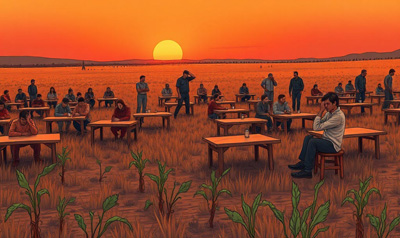 Ninety percent of Americans feel the nation is in an affordability crisis—the new catch phrase for endless above-target inflation, which has become the new norm. The new norm, however, was just reported as getting wore, rising to 3.5% YoY inflation. The rise was due to the war and particularly fuel prices. Ninety percent of Americans feel the nation is in an affordability crisis—the new catch phrase for endless above-target inflation, which has become the new norm. The new norm, however, was just reported as getting wore, rising to 3.5% YoY inflation. The rise was due to the war and particularly fuel prices.
A third of Americans feel the crisis is existential now—as in they worry about whether they will continue to exist if it keeps going on like this. That might be a little over-dramatic, but it’s certainly understandable that a third would feel any lifestyle remotely matching what they have known might not continue to exist for them, and that is because more a third of all Americans say they have experienced two major unplanned lifestyle changes in the past year. Forty percent say their entire lives feel out of control.
It has not just been hard, they say; it has been “disorienting.” That, of course, is a downside effect of a year of chaos, and this second year of King Trump’s reign looks to be no less chaotic than the last.
As half the nation now struggles to pay their bills on time and half say they struggle to buy food, the skyrocketing price of energy that laid into the March PCE inflation report and that just got far worse in the past week with gasoline and diesel prices rocketing higher than many have seen in their entire lives, there is going to be little patience for weathering still higher fuel prices that are likely to arrive when summer hits. Expect patience to wear thin quickly and rage to rise as more and more people are reaching their limits.
When people feel unable to influence the things that matter most, their career, their finances, the broader sense of where the country is headed, the psychological fallout is predictable. Anxiety, helplessness, and that disquieting sense of watching your own life happen to you rather than being authored by you.
Psychologists recommend if you are feeling a level of stress that changes the person you are in ways you do not like, try to focus on the things you can change or affect. Choose some things that calm you like a walk, music, whatever works for you. Little breaks taken almost religiously can help keep the stress from piling up.
So, of course, can true religion, itself, as millions have found when simply and humbly turning toward faith in something beautiful that has stood the test of time—something bigger than oneself. I’m obviously not talking the religion of the Trump cult. I’m talking the kind of faith in something beyond oneself and certainly outside of politics—the kind of hope that has helped many people in times of trouble. It often starts small, of course, with maybe a course correction toward seeking it and finding it, perhaps in the company of others who travel alongside you. A new journey, by itself, can take ones mind off the troubles of this world—a reset.
Rather than staying stuck, a large majority (79%) said they’re planning some kind of mid-year reset, whether focused on mental health (33%), physical health (33%), or finances (25%) [or spiritual health?]. That’s not a minor footnote. It suggests that even amid widespread instability, most Americans are looking for ways to take back control where they can.
And making those changes is resulting in some return of optimism from the past year.
Existential crises tend to arrive when the gap between how life feels and how we thought it would feel becomes too wide to ignore. Right now, that gap is wide for a lot of people. But the willingness to course-correct, even in small ways, may be exactly the kind of agency that helps people find their footing again.

Economic, Social and Political News of Our Troubled Times -- a non-partisan daily collection of the most consequential stories about our complex times from multiple sources around the world.
www.thedailydoom.com
|