Send this article to a friend:
April
06
2026
|
Send this article to a friend: April |
A Storm Is Coming: High Prices and Slowing Growth
It stacks them. A broken appliance. A medical scare. A bill you weren’t expecting. None of those things are unusual on their own – but when they arrive together, that’s when it starts to feel overwhelming. Lately, I’ve been thinking about how much the economy is starting to feel the same way. Not one big crisis. But many smaller pressures… arriving at the same time. These aren’t separate problemsA recent Reuters report noted that U.S. manufacturing activity picked up last month – which sounds like good news! But in the same report:
That’s not a “mixed” picture. It’s a financial system under pressure. Higher costs make it harder for businesses to expand or raise wages. Slower deliveries mean production increases may not last. And both of those forces tend to push prices higher for everyone. We’ve seen this kind of chain reaction before: Costs rise. Supply tightens. Prices increase. Families feel the squeeze. And once that process starts, it doesn’t stay contained. The pressure hasn’t fully arrived yetEnergy is a good example. Recent geopolitical tensions have already pushed fuel prices higher – something you’ve probably noticed at the pump. Bloomberg tells us that, today, dated Brent crude oil (the key real-world crude price) hit the highest level since 2008. Gas prices have already risen over $1/gallon over the last few weeks. Yes, they'll keep going up. But historically, that’s just the first stage. Higher energy costs work their way through the financial system:
In other words, what you’re seeing now looks like the beginning – not the end – of that price pressure. Generally speaking, higher prices slow economic growth. Today, though? Economic growth is already slowing... Cooling economic growth According to The Economist, economic growth has already plunged from 4.4% in the 4th quarter of 2026 to 0.7% in the first quarter of 2026. Yes, it's still positive! But the magnitude of the difference shows us just how fast the slowdown occurred. An 84% decrease in economic growth in just three months is the economic equivalent of stomping the brake pedal and the emergency brake at the same time. Slower growth doesn’t cancel out rising prices. It makes them worse. The combination puts us in a situation where:
Worse still, that gap doesn’t just disappear. Over the long term, if we're lucky, profits and incomes eventually rise to meet higher costs. In the meantime, though? That gap between costs and income has to get filled. Most often with debt. Sometimes with cutbacks, aggressive budgeting and downsized or canceled plans. Those downsized or canceled plans might be trivial (a summer "staycation" instead of a family trip to Disneyworld, for example). Or they might be life-changing – pushing back a planned retirement another five years, in the hopes your savings will catch up with higher costs. So what do we do in this situation? Fortunately, history offers some vital lessons... We’ve seen this pattern before I’m not one for dramatic predictions. As Yogi Bera famously said,
But I do pay attention to patterns. History doesn't repeat, it rhymes. This combination of economic forces – rising costs, slowing growth, and energy pressure – has a precedent. The 1970s. Also known as "the lost decade" of American prosperity. Birch Gold Group contributing writer Brandon Smith of Alt-Market.com offers this bleak thumbnail sketch:
Back then, it wasn’t one single policy mistake or one isolated shock. It was multiple forces reinforcing each other at the same time:
The result was something most people hadn’t ever seen before: A slow economy… paired with persistently high inflation. Economists had to invent a new word to describe this dynamic... We now call it stagflation. I’m not saying we’re there. But consider the parallels to today:
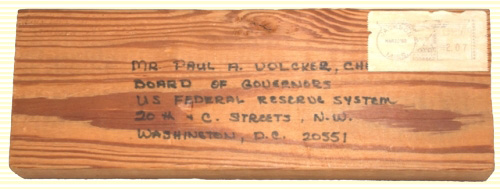
Eerily similar, right? That's what has me so concerned. Worse, though, it's remarkably difficult to end stagflation... When the cure is worse than the diseaseSituations like this are difficult to manage, because the usual tools work against each other. Fighting inflation by raising interest rates slows the economy even further. But stimulating growth by lowering interest rates makes inflation worse... There’s no clean solution – only trade-offs. Paul Volcker famously broke the back of stagflation, but the cure, at the time, seemed worse than the disease. Volcker's "strong medicine"touched off two recessions, almost back-to-back. Interest rates peaked near 20%. Construction and homebuilding companies pieces of lumber to Volcker's office in protest, saying they didn't need lumber because nobody could afford to buy a home.
Image via Museum of American Finance The Federal Reserve itself tells us:
Volcker ruined many lives and many businesses went bankrupt... But he saved the economy. Eventually. And in the meantime, families were forced to deal with the consequences, day by day. What this means today This is the part that often gets missed. It’s not just about economic terminology. It’s about what it feels like day to day:
All this is not because of one big shock. But because multiple pressures are hitting at once. In times like these, prudent people tend to shift their focus. Less on growth. More on stability. Less on chasing returns. More on preserving what they’ve already saved. That’s one reason physical precious metals have remained relevant through so many economic cycles. Physical precious metals, almost uniquely among financial assets, aren't debt-based. They aren't an IOU or an option on hypothetical future profits. Physical gold and silver aren’t affected by the same pressures that drive inflation and currency fluctuations. They sit outside that debt-based financial system. That gives gold and silver powerful diversification benefits you can't find anywhere else. If you want to understand how that works – and how many Americans are taking advantage of those benefits today – you can request our free 2026 Precious Metals Info Kit.
|
Send this article to a friend:
 |
 |
 |