Send this article to a friend:
April
20
2026
|
Send this article to a friend: April |
Prices Are Rising – and the Elite's “Solutions” Are Getting More Outrageous
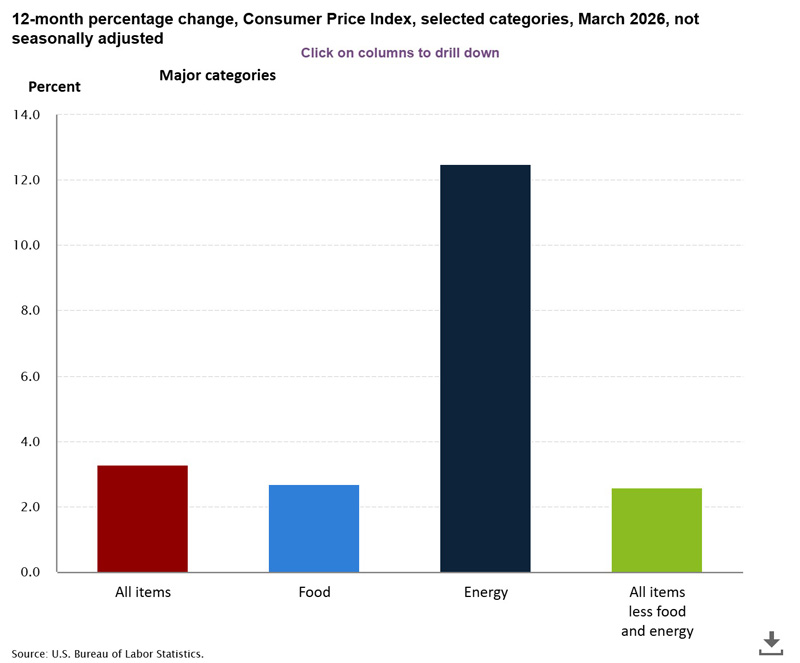
English translation: “Let them eat cake.” More literally, brioche, a delicious luxury bread made with lots of eggs and butter. While Britannica says it’s unlikely that Marie Antoinette actually ever said that phrase, it has come to symbolize the kind of ignorant, dismissive attitude you sometimes see in out-of-touch leadership. I suspect it was more of a naïve misunderstanding, that the queen simply couldn’t imagine scarcity. The monarchy had borrowed heavily to fund war spending (and continued borrowing after the war was over). Higher taxes and inflation made everyday survival difficult for workers, then two bad harvests sent unemployment and food prices soaring. Queen Marie was best known for spectacularly extravagant spending. The lifestyle of the royal court at Versailles, where elaborate 16-course meals ended with spectacular towers of dessert, couldn’t be more different than the typical family. And of course, the Queen’s words became propaganda for revolutionaries who went on to topple the monarchy and execute both King Louis XIV and Queen Marie. It’s a fascinating story, and it immediately came to mind earlier this week. In a conversation on CBS News about higher energy prices, Chevron executive Andy Walz had a suggestion: “People should drive less.” To be fair, Walz knows this isn’t a solution. He admitted there’s no “silver bullet” to bring down prices over the long-term. So he might as well have said, “Get used to it.” First off, it’s rather surprising to hear a senior executive of a corporation say, in public, that people should buy less of his company’s product. (Reminds me of the time Jeff Bezos, Amazon CEO, told people to stop buying things.) To be fair to Walz and Antoinette alike, I don’t think either of them intended to callously dismiss everyday families and their suffering. I think they were both living in a completely different world than you and I do. Walz’s compensation isn’t a matter of public record, but another Chevron executive at the same level took home $9.2 million last year. The top 1% wealthiest Americans spend about the same dollar amount on energy as the bottom 50% – but it’s a much smaller share of their total income. The price of gas doesn’t really affect Walz’s family budget. Even so, that leaves with a more uncomfortable question… Are the people leading the U.S. economy running out of solutions? That quote from Walz isn’t really about Walz, or Chevron. It’s about how those at the top of the food chain in every industry and in government are running out of options for how to keep the wheel of the economy turning at the same rate and making it work for the average person. For example, the Bureau of Labor Statics tells us that the March Consumer Price Index rose 3.3% from a year ago.
Chart via U.S. Bureau of Labor Statistics See the 21.2% increase in gas prices in March? USA Today tells us that’s the biggest single-month increase since record-keeping began in 1967. And as I pointed out the other day, fuel price increases affect the price of everything. But not everyone is as concerned about this as I am.
Recently, the White House wants to talk about tax refunds instead of gas prices. And it makes sense! The “One Big Beautiful Bill Act” really did lower federal income taxes for a lot of people. According to official IRS statistics, the average refund rose nearly $350 to $3,462. That’s great, if a little misleading. “Average” numbers can be skewed a great deal – the “median” or middle value is more informative. To give a real world example, the average household income in the U.S. in 2025 was $121,000, but the median household income (what most people actually make) was $83,730, a 45% difference. That’s because the extremes, like Walz and the other senior executives at Chevron, move the average so incredibly high that it’s almost another world. My personal federal income tax refund was $142 this year. Trust me, I was incredibly surprised that the average was $3,500! Even so, more money in our pockets is a good thing, right? Definitely! The problem is, as David Lawder with Reuters observed, What the Trump tax breaks giveth, the gasoline pump taketh away. An estimated $857 additional pain at the pump this year. Here’s the thing… The federal government does not drill crude oil, or refine it, or transport it. They can influence prices short-term by releasing Strategic Petroleum Reserves (but they have to replace it). They can influence the energy sector by offering tax breaks or removing drilling restrictions – but those tools take years to make a difference. This isn’t a problem the federal government can solve for us. What about the Federal Reserve, though? The Fed’s job is managing the economy, making sure unemployment doesn’t surge and that price increases are no worse than “moderate.” Well, the Fed acknowledges that energy prices (as well as food) are “volatile.” They move around a lot. Both are dependent on real-world forces like supply and demand. A drought in the Midwest or an outbreak of mad cow disease in Brazil can send food prices shooting up… And there’s nothing the Fed can do about it. See, the Fed can control the cost credit and influence the dollar’s purchasing power. But that’s it. The Fed doesn’t (and in fact can’t) set prices on products or services. Mostly, they just determine how cheap credit is. What happens when the people in charge can’t fix it? The answer to that question is actually pretty simple – but it’s not pretty. What happens when the leaders, the folks in charge of running the U.S. economy, cannot prevent prices from increasing? Well, that means you and me and our families and friends, pay those higher prices. We make sacrifices. And it’s not as simple as “drive less.” The U.S Census Bureau tells us the vast majority of American workers, 85%, commute to work. Only about 5% choose (or are able) to use public transportation. Those of us who commute do so for a simple reason: To get a paycheck. Getting that paycheck is going to cost more. Most of us who commute to work simply don’t have the option of moving our homes closer to our work. Most of our employers would just laugh if we asked them to relocate the office closer to our homes. A handful of people I know drive over an hour everyday, each way, to get that paycheck. You can’t “drive less” to get to the doctor for a vital appointment. You can’t “drive less” if you have to pick up your child’s asthma prescription or your blood pressure medication today because you’ve run out because the mail order pharmacy couldn’t get it to you quick enough because of supply chain snarls. Uber? Sure, but that costs more too. Doordash? Great, but again, that’s going to cost more. Order everything from Amazon? You can try. But remember, energy prices are embedded in almost every other product and service across the economy. Focusing on what we can controlYes, the cost of living has increased. It hasn’t increased at the same rate as we saw under the previous administration, but the rate that it’s increasing is getting faster. And there are a number of factors conspiring to make it ever more likely that it will continue to get worse. The good news, though, is that you still have the ability to do something about it, at least for yourself and your family. You can do as many Americans have done, and choose to diversify a portion of your savings out of the debt-based financial system. How? By diversifying into precious metals which, historically, work strongly as a hedge against inflation and rising prices. Because demand for precious metals comes from a variety of sources, they tend to maintain their value and adjust in prices as prices in the overall economy increase. If you’re new to the idea of diversifying into precious metals, you can start your due diligence through education by getting a better understanding of why people diversify into precious metals. On the other hand, if you already know that you want to diversify with physical precious metals, request your free copy of the 2026 Gold IRA Info Kit right here.
|
Send this article to a friend: