|
|
Sell Bonds and Buy Gold
What happened in 1815 was that the Rothschilds had accumulated vast amounts of gold because they thought that with Napoleon back there would be a long war. The defeat of Napoleon therefore looked like a financial disaster for them as the price of gold would plummet without soldiers to pay. But the patriarch Nathaniel Rothschild turned this strategic error to their advantage by swiftly buying up bonds - which had become depressed in price - and selling their gold. The gold price fell and bonds recovered sharply as the government no longer needed to keep issuing more of them to finance the war. Buy gold, sell bonds Now in modern markets, it is striking that exactly the reverse trade applies. Governments all over the world are about to flood the bond markets with paper to finance their bank bailouts and economic stimulus plans, and the final bill could amount to more than $6 trillion on some estimates and very much higher for a full derivatives rescue plan. In effect the governments are about to need to raise the funds to fight another Napoleon. This massive new supply of bonds will depress the price of existing bonds, and indeed this is evident in the recent fall in 10-year bond prices and their rising yield. Inflation of the money supply we also know to be a natural enemy of bonds which pay a fixed coupon and are thus extremely sensitive to any rise of inflation that will swiftly erode the coupon, and even make it negative in real terms. And we know governments all over the world have embarked on massive money creation. This can not be good news for bonds, although in the short term the brief return of deflation will help them. Gold and inflation On the other hand, inflation is the friend of gold because it has an almost fixed supply, and silver might well be better still as its supply is even tighter. Gold prices are also still relatively depressed compared to other commodity price movements over the past three decades, and silver is probably the most depressed commodity price of all. Thus the modern Rothschilds might well be counselled to reverse their Waterloo bet and sell bonds and buy gold and silver. Timing is always a devil in financial markets - and the reversal of the recent bear market rally in stocks would give bonds another short lease of life - but getting the fundamentals right also works. That is how the Rothschilds made a billion after Waterloo.
Mr. Cooper spent a decade in London as a business journalist specializing in construction and real estate from 1984-95, and then moved to Dubai as the launch editor of Gulf Business, the first-ever business magazine in the Gulf. He is also the author of ‘Building Relationships: The History of Bovis 1885-2000′. As an investor Mr. Cooper has made only a few significant moves: buying Docklands property in 1993 and selling out in 1998; starting a dot-com company in Dubai in 2000 which later merged with AME Info; and being an early buyer of Dubai property in 2002. He is currently invested in gold and precious metals. Mr. Cooper holds a master's of arts degree in politics, philosophy and economics from Trinity College, Oxford University, and studied French at institutes in Tour and La Rochelle before becoming an administrative trainee in the European Commission in Brussels where he specialized in development economics. |
 |
 |

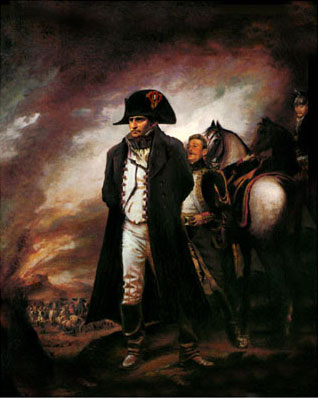 After the Battle of Waterloo in 1815 when Britain, Austria and Germany beat Napoleon, the House of Rothschild made the equivalent of more than a billion dollars today by selling their gold and buying up bonds, precisely the reverse of the strategy they are probably employing now.
 Peter J Cooper is a freelance financial journalist based in the Dubai Media City, and a former partner in the Middle East's best-read English language website