Send this article to a friend:
January
13
2014

|
Send this article to a friend: January |
|
Living in a world we can't understand 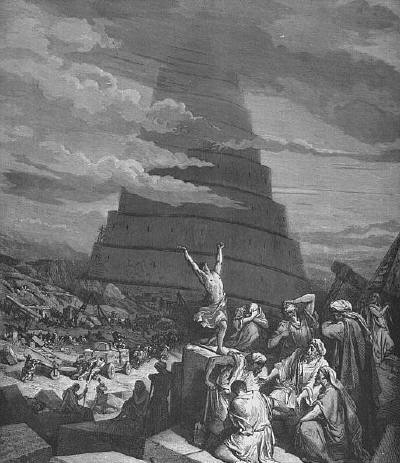
We live in an age of enlightenment, in the belief that the entire universe is open to our inspection and more than this, that it is theoretically all intelligible to us. If we just apply enough science and enough rationality, nature will reveal all its secrets to us in ordered sets of data that we can then use to control the entire world around us. That we can wrest a comfortable life from the Earth is, however, nothing special. Plants and animals do this without resorting to colleges, symposia or research laboratories. And, humans used to do it without these things as well. Ancient Greeks--if they survived childhood diseases, war and the occasional plague--regularly managed to live into their 60s and 70s among balmy Mediterranean breezes. It's not that there hasn't been any progress; it's just that we may not have made as much progress as we think. And yet, in the age of Big Data we have become ever more enamored with the representations of the world that we gather in the form of numbers and words, believing (wrongly) that the map is the territory. My father used to annoy his business partners by offering quick-fire solutions to problems--solutions that worked with distressing regularity. When pressed, he often could not explain why these solutions would work, only that he knew they would. His partners, suspicious of things that could not be rendered into rational discourse, eventually bought him out. How could they trust such intuitions, even if they appeared to be on target? In his book Antifragile: Things that Gain from Disorder (from which I've drawn several ideas for this piece) author Nassim Nicholas Taleb cites the above quotation by Nietzsche and calls it "the most potent sentence in all of Nietzsche's century." We tend to dismiss things we cannot understand: "If I cannot understand it, then it must not exist." And there is the seemingly less pernicious, "If I cannot understand it, it must not be important." The second notion is actually more pernicious. I can show convincingly that a person who does not understand a well-supported fact is merely ignorant. But it is much harder to convince someone that something which he or she doesn't understand--but doesn't deny either--is actually important enough to pay attention to. Climate change comes to mind. This is the conundrum of the modern world. The world is so complex that it seems hopeless to try to understand how all things human and natural work together. We live in an age that calls out for explanations of nature and society that provide something genuinely revelatory to the layperson. What we mostly get, however, is hucksterism and public relations, information designed to mislead rather than clarify. Under the circumstances, we are lucky if we occasionally discover a small and perhaps fleeting truth. We often believe that the explainers know what they are talking about because they speak with such conviction. The economists, the Wall Street analysts, the technical geniuses, the captains of industry, the billionaires, the airwave pundits, they must know something we don't or they wouldn't be that successful. But what they know isn't necessarily what they are telling us. And, what they are telling us is, in any case, almost always designed to advance their interests, not ours. In such a world, how shall we get through the day? It is best to start from humble premises:
None of these principles will deliver you from all of life's difficulties. But they can help you avoid hucksters who simply wish to exploit you by placing you in harm's way while they reap the benefits. Only when we accept that we have a rather limited understanding of the world we live in are we able to act in ways that are prudent for ourselves and our communities and respectful of the Earth and of our fellow beings, human and otherwise. The image is an engraving by Gustave Doré entitleed "The Confusion of Tongues" from Wikimedia Commons - Resilience editor
Kurt Cobb is an author, speaker, and columnist whose novel Prelude provides a startling reinterpretation of contemporary events and a window onto our energy future. He writes a widely followed blog on energy and the environment called Resource Insights and is a regular contributor to the Energy Voices section of The Christian Science Monitor.
|
|---|
Send this article to a friend:
 |
 |
 |